The Best Ecommerce Marketing Trends to follow in 2026
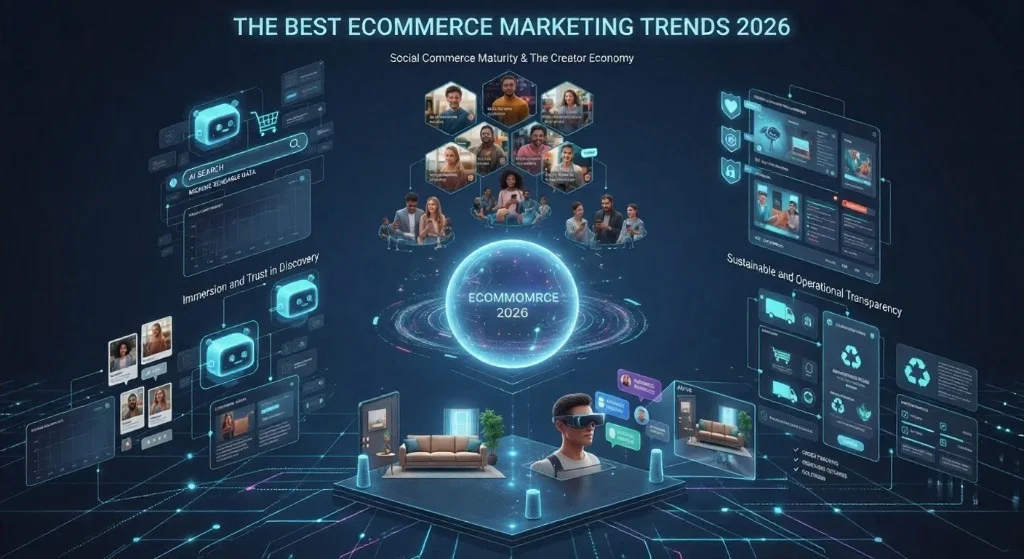
The Best Ecommerce Marketing Trends to follow in 2026 The ecommerce world is changing at a rapid pace. This is because going forward into 2026, the business will have to adjust to the new technology, changing consumer behavior, and competition. What was effective a year ago might not be effective tomorrow. Brands that want to be ahead must be innovative, personalized and data-driven. This blog will discuss the best ecommerce marketing trends that you should keep in 2026 in order to grow your business, enhance customer experience, and increase conversions. Get Free Growth plan Personalization with AI Power is no longer an option. Artificial intelligence (AI) has changed the interaction between ecommerce brands and customers. In 2026, personalization will go way beyond the use of the first name when addressing emails to the users. Current AI applications examine the browsing history, purchase history, and even instant activities to provide hyper-personalized experiences. Product recommendations, dynamic web content and everything can now be customized to the individual. Why it matters: Enhances consumer interaction. Increases conversion rates Builds long-term loyalty How to implement: Apply recommendation engines based on AI. Individualize email marketing and product web pages. Provide user behavior-based pricing and offers. Get Free Growth plan Voice Commerce is Picking Up. Voice commerce is emerging as a prominent force in the marketing of ecommerce with the emergence of smart devices and voice assistants. Voice search is emerging as a major way in which consumers search and get products, compare prices and purchase. Voice search optimization of your ecommerce store is the way to go in 2026. Key strategies: Target conversation-related key words. Long-tail query optimization. Enhance the mobile experience and speed. Voice search queries are more natural and question-based, and thus your content should have that tone. Get Free Growth plan Social Commerce is taking over Sales Channels. Social media sites are not only a place to interact anymore, but they are also complete shopping sites. Social media such as Instagram, Tik Tok, and Facebook keep adding smooth shopping capabilities in 2026. Consumers do not need to leave the application to learn about, review, and shop the products. Benefits of social commerce: Shortens the buyer journey Enhances product discovery Establishes trust using user-created content. Best practices: Invest in short video materials. Cooperate with influencers. Use live shopping features Get Free Growth plan Video Marketing is Conversion Driving. One of the most effective ecommerce marketing tools currently is video content. Videos allow the customers to make informed choices such as product demos and behind-the-scenes. In specific verse, short-form videos are taking over user attention spans in the year 2026. Why video works: Shows the usage of the product. Develops credibility and sincerity. Increases interaction by platforms. Types of videos to focus on: Product tutorials Customer testimonials Unboxing videos Live streams Get Free Growth plan The Future of Data is First-Party Data. As privacy laws are tightening and third-party cookies are becoming less popular, the ecommerce companies are forced to depend on first-party data. First-party data is direct information on your customers gathered on your site, application, or CRM databases. Advantages: More accurate and reliable Enhances personalization Latches more relationships with customers. How to collect it: Email subscriptions Loyalty programs Surveys and feedback forms Get Free Growth plan Ethical Marketing and Sustainability are More. The consumers of 2026 are more environmentally aware than ever regarding sustainability and ethical conduct. They like brands which they consider compatible with their values. Ecommerce businesses should emphasize their social and environmental responsibility. What customers expect: Eco-friendly packaging Transparent sourcing Ethical labor practices Marketing tips: Share sustainability experience. Be straightforward and sincere. Avoid greenwashing Get Free Growth plan Omnichannel Experience is Necessary. Customers engage with the brands through various channels: websites, applications, social media, emails, and even brick-and-mortar shops. Omnichannel strategy will provide a smooth experience throughout the touchpoints. Key elements: Consistent branding Unified customer data Fluid interchannel transitions. As an illustration, a customer must be in a position to add a product to his/her cart using mobile and finalize the purchase using desktop without any hassle. Get Free Growth plan Enhanced Shopping Experience with Augmented Reality (AR). AR is innovating the manner in which clients engage with products over the internet. It enables customers to see the products in actual situations before buying. Examples: Trying on clothes virtually Arranging the furniture in your room. Testing makeup shades Benefits: Reduces return rates Enhances customer confidence. Enhances engagement Get Free Growth plan Quickened Delivery and Logistics Innovation. One of the key to ecommerce success is speed. Customers are demanding better delivery services, including same-day delivery. Those brands that invest in logistics and fulfillment technologies have a competitive advantage. Trends to watch: Micro-fulfillment centers Drone deliveries Real-time tracking Right delivery timelines and updates create confidence and enhance customer satisfaction. Get Free Growth plan The Subscription Models are on the increase. Ecommerce models which involve subscriptions are becoming quite popular in many fields including beauty products and even groceries. Why subscriptions work: Predictable revenue Retention of more customers. Convenience for customers Ideas to implement: Monthly product boxes Auto-replenishment services Exclusive member benefits Get Free Growth plan Influencer Marketing is Becoming More Authentic. The sphere of influencer marketing has been developing, and it has shifted to authenticity and micro-influencers. Real life experiences are more trusted by the consumers than the glossy advertisements. Key strategies: Collaborate with niche influencers. Pay attention to long-term partnerships. Encourage honest reviews Honesty brings about improved interaction and greater bonding to your audience. Mobile First Shopping Experience. Mobile commerce takes over ecommerce traffic in 2026. It is not a case of mobile-first anymore, it is a necessity. Optimization tips: Fast-loading pages Easy navigation Secure and simple checkout Fluid mobile experience has a direct influence on conversions and customer satisfaction. Get Free Growth plan Artificial Intelligence Chatbots and Conversational Commerce. Customer experience is changing using AI chatbots and dialogue interfaces. These tools are immediate response tools and also help users navigate their purchasing journey and enhance the customer experience. Benefits:
10 Ecommerce Marketing Mistakes That Kill Your Sales
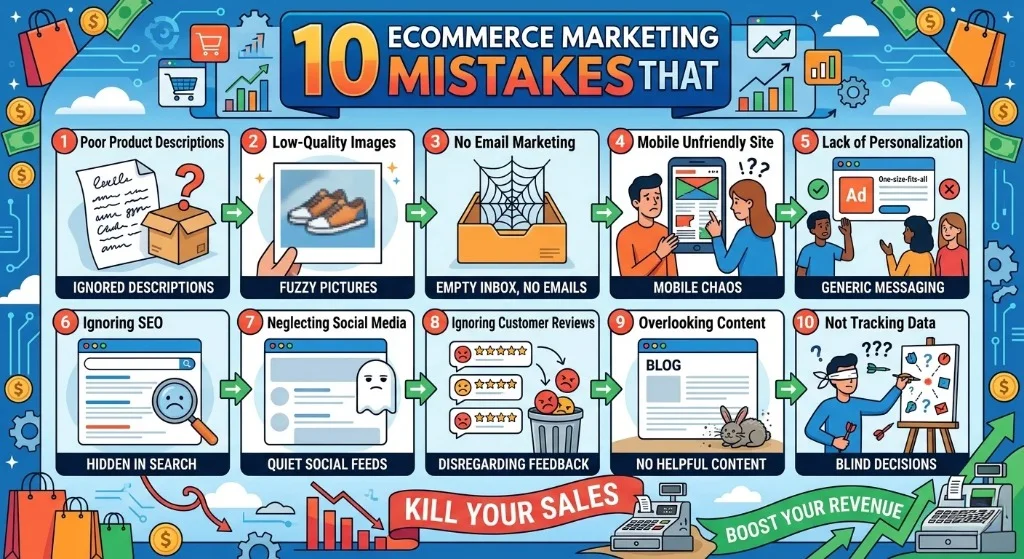
10 Ecommerce Marketing Mistakes That Kill Your Sales Running an ecommerce store is exciting, but it can also be frustrating when sales don’t grow as expected. Many online businesses invest heavily in advertising, website design, and product development, yet they still struggle to convert visitors into customers. The reason often lies in simple but critical marketing mistakes that silently hurt performance. At Aim n Launch, we frequently analyze ecommerce websites and marketing campaigns, and we see the same issues repeated across different industries. Avoiding these mistakes can dramatically improve your conversion rate, customer retention, and overall revenue. In this blog, we’ll explore 10 ecommerce marketing mistakes that can kill your sales—and how to fix them Get Free Growth plan 1. Not Understanding Your Target Audience One of the biggest mistakes ecommerce businesses make is trying to sell to everyone. When you attempt to target a broad audience, your marketing message becomes too generic and fails to resonate with anyone. Successful ecommerce brands deeply understand their customers—their needs, pain points, preferences, and shopping behavior. How to fix it: Create detailed buyer personas. Analyze customer data and website analytics. Use surveys and feedback from existing customers. Segment your audience for personalized marketing. The more you understand your audience, the more effectively you can tailor your marketing campaigns. 2. Weak Product Descriptions Many ecommerce stores rely on basic or copied product descriptions. Unfortunately, this approach fails to persuade potential buyers or highlight the unique value of the product. A good product description should do more than list features—it should explain how the product benefits the customer. How to fix it: Write original, detailed descriptions. Highlight benefits instead of only features. Use storytelling to connect emotionally with customers. Include keywords for SEO optimization. Strong product descriptions can significantly increase conversions and reduce cart abandonment. 3. Ignoring Search Engine Optimization (SEO) SEO is one of the most powerful long-term strategies for ecommerce growth. However, many businesses ignore it or treat it as an afterthought. Without SEO, your store relies solely on paid advertising for traffic, which increases customer acquisition costs. How to fix it: Optimize product pages with relevant keywords. Improve meta titles and descriptions. Use structured data and schema markup. Create SEO-friendly blog content. At Aim n Launch, we often recommend combining technical SEO with content marketing to drive sustainable traffic. 4. Poor Website User Experience Even the best marketing campaigns will fail if your website is difficult to navigate. A confusing layout, slow loading speed, or complicated checkout process can quickly drive customers away. Online shoppers expect a smooth and intuitive experience. How to fix it: Improve page loading speed. Use clear navigation and categories. Optimize the checkout process. Ensure mobile-friendly design. A seamless user experience increases trust and encourages customers to complete their purchases. 5. Not Optimizing for Mobile Users Mobile commerce now accounts for a large percentage of online shopping. Yet many ecommerce stores still prioritize desktop design and overlook mobile usability. If your website is not mobile-friendly, you could lose a significant number of potential customers. How to fix it: Use responsive website design. Optimize product images and layouts for mobile screens. Simplify forms and checkout steps. Test the site on different devices. Mobile optimization is no longer optional—it is essential for ecommerce success. 6. Overlooking Email Marketing Many ecommerce businesses focus heavily on paid ads but ignore email marketing, which remains one of the highest ROI marketing channels. Email allows you to nurture relationships with customers and encourage repeat purchases. How to fix it: Build an email list through website signups. Send abandoned cart reminders. Offer exclusive discounts and promotions. Create automated email sequences. Email marketing keeps your connected with customers and drives long-term loyalty. 7. Lack of Social Proof Online shoppers rely heavily on reviews, ratings, and testimonials before making a purchase. If your ecommerce store lacks social proof, potential customers may hesitate to trust your brand. Social proof helps reduce uncertainty and builds credibility. How to fix it: Display customer reviews on product pages. Encourage buyers to leave feedback. Share user-generated content on social media. Highlight testimonials and success stories. Authentic customer experiences can greatly influence purchasing decisions. 8. Poor Product Images In ecommerce, customers cannot physically touch or try products. This makes product images one of the most important elements in influencing buying decisions. Low-quality or limited images can discourage customers from purchasing. How to fix it: Use high-resolution product photos. Show multiple angles of the product. Include lifestyle images demonstrating usage. Add zoom functionality for details. Professional visuals make your products more appealing and increase buyer confidence. 9. Ignoring Data and Analytics Marketing without analyzing data is like driving without a map. Many ecommerce businesses run campaigns without tracking performance or understanding customer behavior. Data-driven decisions help optimize marketing strategies and improve results. How to fix it: Track website analytics regularly. Monitor conversion rates and bounce rates. Analyze customer journey and behavior. Use A/B testing for ads and landing pages. Using data effectively helps identify what works and what needs improvement. 10. Not Retargeting Lost Customers A large percentage of visitors leave ecommerce websites without making a purchase. If you don’t retarget these visitors, you lose valuable sales opportunities. Retargeting reminds potential customers about the products they viewed and encourages them to return. How to fix it: Use retargeting ads on social media and search engines. Send abandoned cart emails. Offer limited-time discounts for returning visitors. Use dynamic product ads. Retargeting campaigns can significantly increase conversions and recover lost sales. Get Free Growth plan Final Thoughts Ecommerce success is not just about attracting visitors—it’s about converting them into loyal customers. Even small marketing mistakes can have a major impact on your sales and growth. By avoiding these 10 common ecommerce marketing mistakes, you can improve your website performance, build stronger customer relationships, and maximize revenue. At Aim n Launch, we specialize in helping ecommerce businesses optimize their marketing strategies, improve website performance, and drive sustainable growth. If your ecommerce store is struggling with low
15 of the Best strategies for marketing on Ecommerce to Boost sales in 2026
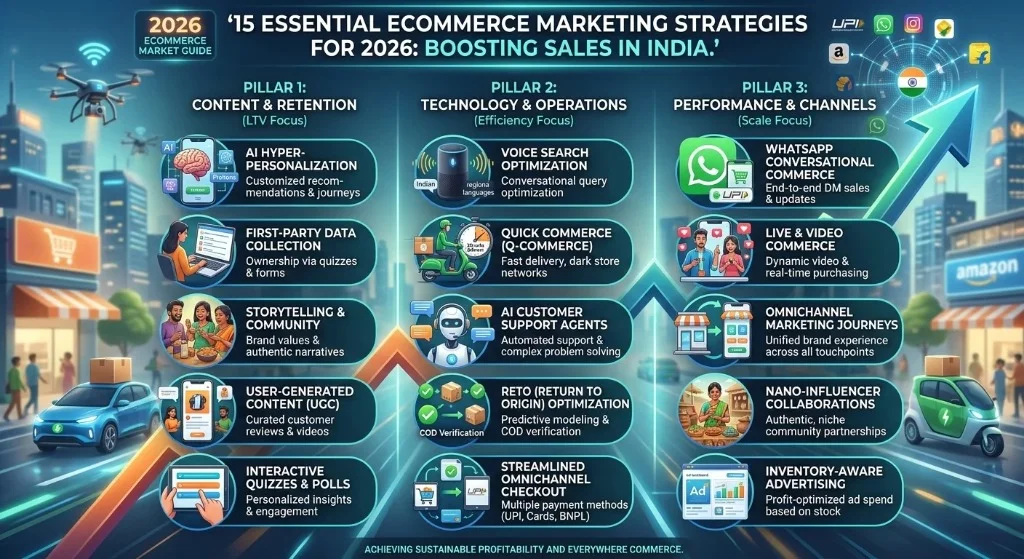
15 of the Best strategies for marketing on Ecommerce to Boost sales in 2026 Ecommerce is growing rapidly however, so is competition. Launching an online store and promoting it are no longer sufficient to boost sales consistently. In 2026, marketing ecommerce requires planning, experimentation and long-term planning. When your revenue fluctuates each month, or your advertising costs continue to rise, the issue isn’t only the platform. It’s more often the method behind it. Here are 15 online marketing strategies that will increase sales, particularly for businesses operating in markets that are competitive, such as India. Get Free Growth plan 1. Create a Full-Funnel Performance Marketing Structure A majority of online retailers focus on conversion-related campaigns. It’s an error. A solid performance-based marketing strategy exposes your product or service to new buyers that are interested in your product, then retargets them before converting them into customers. When campaigns are organized across consideration, awareness and conversion stages and conversion stages, sales tend to be more stable. Without this method of layering the results are often dependent too much on one campaign. 2. Make an investment in high-quality creative for your ads In 2026, quality of the creative is often more important than the targeting. AI-driven advertising platforms improve delivery however they are not able to solve weak creatives. Videos of short form, content created by users testimonials and product demonstrations ads are more effective than static banners. Test different angle, formats, and hooks on a regular basis is crucial to boost e-commerce sales. The effects of creative fatigue are real. Continuously refreshing ads will prevent any performance loss. 3. Optimize Product Pages to Convert The process of driving traffic and not optimizing the product’s pages is inefficient and wastes money. A clear description of the product, message that is focused on benefits, high-quality graphics reviews from customers, and trust badges greatly increase conversion rates. A lot of e-commerce sites lose sales due to the fact that their value proposition is not clear. Conversion rate optimization can lead to more profit growth than growing budgets for advertising. 4. Increase Website Speed and Mobile Experience Slow websites can kill sales. Indian online shopping is heavily mobile, and customers leave websites that load slowly fast. Speeding up page loading, making it easier to checkout and creating an easy-to-use mobile interface could drastically increase the number of purchases completed. Growth in sales is usually tied to technological improvements that the customer don’t even notice. 5. Utilize Retargeting strategically Most people don’t purchase from their first trip. Retargeting them helps remind them the reason they were initially interested in the first place. Dynamic product advertisements and reminders for abandoned carts and special offers that are limited in time can help bring the warm audience back. When properly executed the retargeting campaign usually yields greater ROI from advertising when compared to cold-audience campaigns. 6. Implementing the Email Marketing Automation Marketing via email is among the most profitable e-commerce marketing strategies. Automated flows like welcome sequences and abandoned cart emails post-purchase follow-ups and replenishment reminders can increase the number of repeat purchases. Regular communication helps build trust and familiarity that directly impact sales in the long run. 7. Utilize WhatsApp Marketing in India Within the Indian market, WhatsApp marketing has become more effective. Automated reminders and updates on orders and personalized offers may increase repeat purchases and help retrieve carts that have been abandoned. If used in a responsible manner, WhatsApp creates a more personal and direct communication channel as compared to email. 8. Concentrate on the Search engine Optimization (SEO) Paid ads bring instant exposure However, SEO generates long-term traffic. Optimizing the pages of category pages, product descriptions and releasing content that targets buyers enhances the organic reach of your site. If your online store is listed for keywords with high intent the sales will increase, but without increases in ad spending. SEO is a more slow method however it does increase with time. 9. The increase in average order value (AOV) Sometimes, the most efficient method of increasing sales isn’t to acquire new customers, but instead improving the value of each purchase. Bundled offers, upsell recommendations as well as cross-sell recommendations and free shipping thresholds can encourage customers to spend more on each transaction. Even a slight increment in the average value of an order could have a significant impact on overall sales. 10. Utilize Influencers and UGC Collaborations People trust people more than brands. Micro-influencers, authentic user-generated content and authentic micro-influencers provide credibility and social proof. In areas such as fashion as well as beauty and lifestyle, collaborations with influencers can increase trust for brands and improve conversion rates. 11. Assess and Reduce the cost of Customer Acquisition (CAC) Costs of acquisition are rising and is one of the major issues in marketing ecommerce. Instead of simply increasing budgets businesses must look at what campaigns, their audiences and their creatives are delivering the best results. Targeting optimization, eliminating low-performing segments and refining messaging could slowly reduce the cost of acquiring customers while ensuring the volume of sales. 12. Track Data in a Proper Way with GA4 as well as Conversion Tracking Without reliable data Scaling becomes a the result of guesswork. A proper event tracking system and revenue attribution as well as performance analysis can help brands determine profitable channels. Understanding the campaigns that generate real sales, not just clicks is essential to increase e-commerce revenue in a sustainable manner. 13. Inspire Customer Review and social proof Reviews affect buying decisions more than most brands recognize. Incorporating testimonials, photos of customers and ratings boosts credibility. In markets that are competitive social proof can be the primary factor in deciding between two products that are similar. 14. Develop Limited-Time Offers Strategically The urgency and scarcity drive the actions. Discounts for a limited time or seasonal sales as well as exclusive launches help to make decisions faster. However, overusing discounts can damage brand perception. It is important to choose the right timing. 15. Develop a system for
Ecommerce Marketing in 2026: Complete Guide for Indian Brands to Scale Profitably
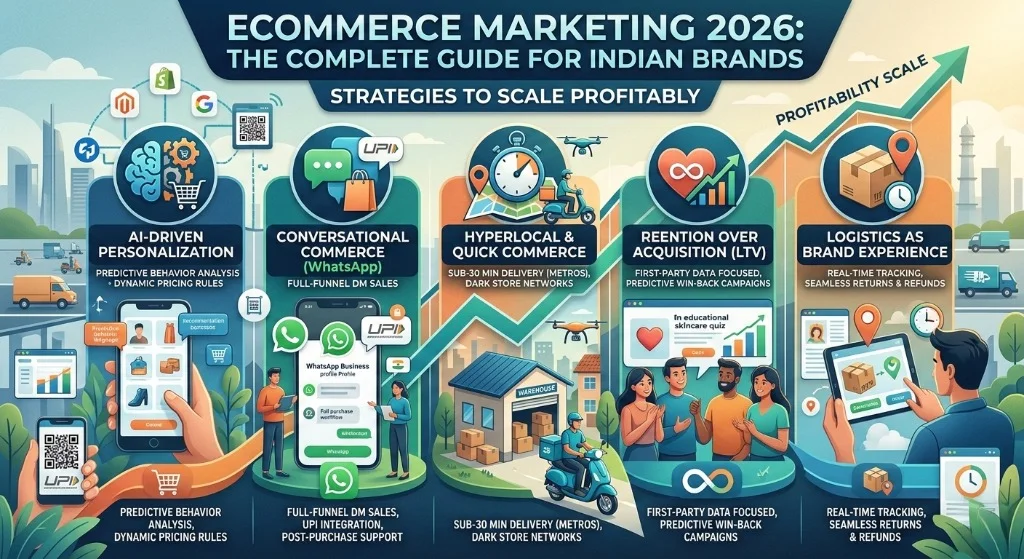
Complete Guide to Ecommerce Marketing in 2026 Table of Contents 1. The Reality of Ecommerce Marketing in 2026 2. Why Growing an Ecommerce Brand in India Feels Harder Now 3. Performance Marketing Is Still Important — But Not Enough 4. The Real Cost of Ecommerce Advertising in India 5. Why SEO Is Finally Getting Attention 6. Conversion Problems No One Talks About 7. Retention Is Quietly Driving Serious Revenue 8. Data, Tracking, and Why Guesswork Is Expensive 9. What a Scalable Ecommerce System Actually Looks Like 10. Final Thoughts The Reality of Ecommerce Marketing in 2026 If you’ve been in ecommerce for a few years, you’ve probably noticed something: what worked earlier doesn’t work the same way anymore. There was a time when you could launch a Shopify store, run Meta ads, and see decent returns without too much structure. That phase is gone. In 2026, ecommerce marketing is more competitive, more technical, and honestly, less forgiving. The brands that are growing today aren’t just “running ads.” They’re managing systems. They know their acquisition numbers. They understand where money leaks. They track profitability — not just revenue screenshots. That shift matters. Get Free Growth plan Why Growing an Ecommerce Brand in India Feels Harder Now India’s ecommerce space is crowded. Every week, new D2C brands launch in fashion, beauty, wellness, electronics — you name it. Customers have more options, and platforms are charging more to reach them. Ad costs have gone up. Creative fatigue happens faster. AI campaigns optimize aggressively but don’t magically fix weak strategies. If your campaigns feel unstable — one good week, one bad week — it’s usually not the platform. It’s the structure behind it. In 2026, casual marketing doesn’t survive long. Get Free Growth plan Performance Marketing Is Still Important — But Not Enough Let’s be clear: performance marketing is still the backbone of ecommerce growth. Google Ads and Meta Ads are powerful. They can scale brands fast. But only when used correctly. What’s changed is how they need to be structured. Brands that rely on one campaign and keep increasing budgets often hit a ceiling. Smarter brands think in layers. They introduce the product to new audiences first. Then they retarget people who show interest. Then they focus on converting high-intent users. After that, they push retention. It sounds simple. It’s not. But it’s necessary. Without this layered thinking, scaling becomes expensive. Get Free Growth plan The Real Cost of Ecommerce Advertising in India Most founders ask the wrong question. They ask, “How do I reduce my CAC?” A better question is, “How do I make my CAC sustainable?” In India, acquisition costs vary widely. Fashion brands might acquire customers at ₹500–₹800. Electronics brands often pay more. But the number alone doesn’t tell you much. What matters is how much that customer spends over time. If someone buys once and never returns, your business constantly needs new customers to survive. That’s expensive and stressful. The real advantage in 2026 isn’t just cheaper ads. It’s better systems around those ads. Why SEO Is Finally Getting Attention For years, many ecommerce brands ignored SEO because paid ads felt faster. And they are faster. But when ad costs rise, founders start looking for stability. That’s where SEO becomes interesting. Optimizing category pages. Improving product descriptions. Creating content around real customer questions. Fixing site speed. These things aren’t glamorous, but they build long-term visibility. SEO doesn’t explode overnight. It compounds quietly. Brands that started investing in SEO two or three years ago are now enjoying traffic without paying for every click. In a competitive market like India, that matters. Get Free Growth plan Conversion Problems No One Talks About Here’s something uncomfortable: most ecommerce websites waste traffic. Not because the product is bad — but because the experience isn’t optimized. Slow loading pages. Confusing checkout. Weak product descriptions. No trust signals. These things reduce conversion more than most people realize. If your store converts at 1.5%, improving it to even 2.5% can dramatically change revenue — without increasing ad spend. But conversion optimization requires patience. Testing. Small adjustments. It’s less exciting than launching a new ad campaign, which is why many brands skip it. Get Free Growth plan Retention Is Quietly Driving Serious Revenue Retention marketing doesn’t get enough attention. Email automation. WhatsApp flows. Post-purchase follow-ups. Replenishment reminders. Loyalty offers. When done well, these systems generate repeat purchases without constant acquisition pressure. Some ecommerce brands in India now generate a significant percentage of revenue from returning customers. That changes everything. Suddenly, ad scaling becomes easier because you’re not starting from zero every month. Retention isn’t optional anymore. It’s strategic protection. Get Free Growth plan Data, Tracking, and Why Guesswork Is Expensive With privacy updates and tracking changes, clean data has become critical. If you don’t know your real acquisition cost, channel contribution, or conversion rate, scaling becomes guesswork. Guesswork is expensive. Proper GA4 setup, event tracking, and consistent performance reviews aren’t “technical extras.” They are business fundamentals now. The brands that grow steadily are the ones that understand their numbers deeply. Get Free Growth plan What a Scalable Ecommerce System Actually Looks Like When you zoom out, profitable ecommerce marketing in 2026 isn’t about one tactic. It’s about alignment. Acquisition campaigns bring in the right audience. Landing pages convert efficiently. Retention systems increase lifetime value. SEO builds long-term visibility. Data supports decision-making. When these pieces work together, growth feels stable instead of chaotic. And stability is underrated. Get Free Growth plan Final Thoughts Ecommerce marketing in 2026 is demanding — especially in India’s competitive environment. But it’s also full of opportunities for brands that think long-term. Short-term hacks don’t build durable businesses. Structured strategy does. If your ecommerce brand is serious about improving profitability, stabilizing performance, and building a scalable growth engine, the conversation should move beyond “running ads” and toward building systems that support real, measurable growth. That shift is where sustainable success begins.