Ecommerce SEO Services That Turn Organic Traffic Into Actual Revenue

Ranking number one for a keyword nobody buys from is not an SEO win. It is a vanity metric dressed up as a strategy.

If you run a D2C or ecommerce store in India, you already know how expensive paid ads have become. Meta CPMs keep climbing. Google Shopping gets more competitive every quarter. And every rupee you spend on ads disappears the moment you stop spending.

SEO is the opposite. It compounds. The work you do today keeps bringing in traffic and revenue 6, 12, 18 months from now. But only if it is done right. And for ecommerce, “right” looks nothing like what a generic SEO agency will do for you.

We are Aim n Launch, a Delhi-based agency that works exclusively with D2C and ecommerce brands. Our ecommerce SEO services are built around one goal: driving organic traffic that actually converts into profitable orders.

Book Free Strategy Call

Why Generic SEO Does Not Work for Ecommerce

Here is what happens when a regular SEO agency takes on an ecommerce client. They run a basic audit, identify some keyword opportunities, write a few blog posts, build some backlinks, and send you a monthly report showing how many keywords moved up. Six months later, your organic traffic has grown by 40%, but your organic revenue barely moved.

Why? Because generic SEO agencies do not understand ecommerce.

They optimize the wrong pages

Blog posts and informational content bring traffic, but product and category pages bring buyers. A generic agency will write 20 blog posts about “skincare tips” while your collection pages for “vitamin C serum” and “niacinamide moisturizer” sit unoptimized. The pages where people actually make purchase decisions get ignored.

They ignore ecommerce technical issues

Ecommerce sites have technical challenges that a regular business website never faces. Faceted navigation creating thousands of duplicate URLs. Out-of-stock products that still get indexed. Paginated collection pages splitting your ranking power. Variant URLs (size, color) cannibalizing each other. Slow page speed because of 15 Shopify apps loading JavaScript on every page. If your SEO agency does not understand these issues, they are going to hurt your rankings, not help them.

They chase vanity keywords

Ranking for “best skincare products” sounds exciting until you realize it brings window shoppers, not buyers. Ecommerce SEO should target keywords with purchase intent: “buy vitamin C serum online,” “niacinamide serum for oily skin price,” “protein powder 1kg whey isolate.” These searches come from people who are ready to buy, not just research.

They do not integrate with your paid strategy

In a smart ecommerce operation, SEO and paid ads talk to each other. Your Google Ads search term report shows exactly which keywords convert into purchases. That data should feed your SEO strategy. And your organic ranking data should inform which keywords you can stop paying for. Most agencies treat SEO and paid as completely separate planets. We do not.

Brands we grow.

OUR CLIENTS EXPERIENCE
UNCOMFORTABLE ORGANIC GROWTH

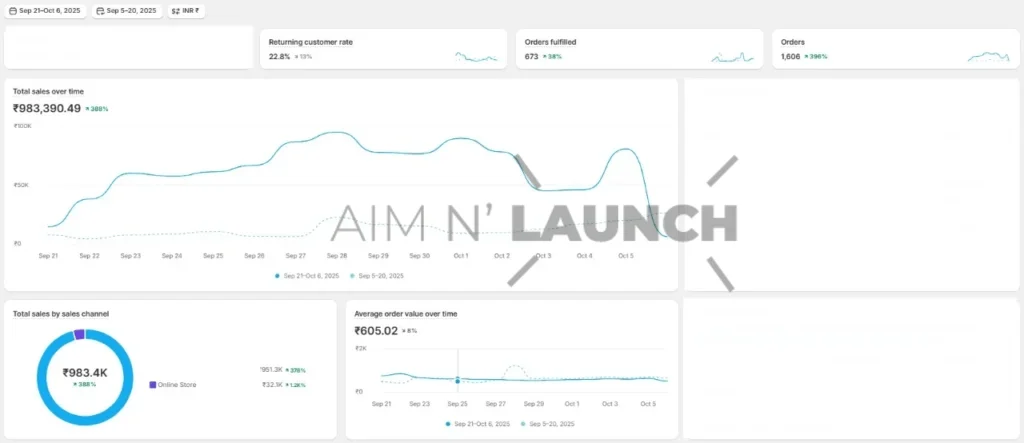
FMCG Hydration Brand: 16 days • ₹9.62L Net sales • 1,606 orders • AOV ₹605 • Returning 22.8% • +382% net vs prior period

VIEW MORE CASE STUDY
FMCG Hydration Brand Case Study

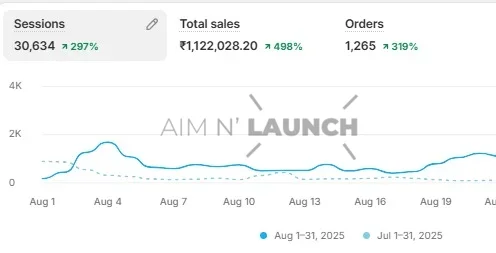
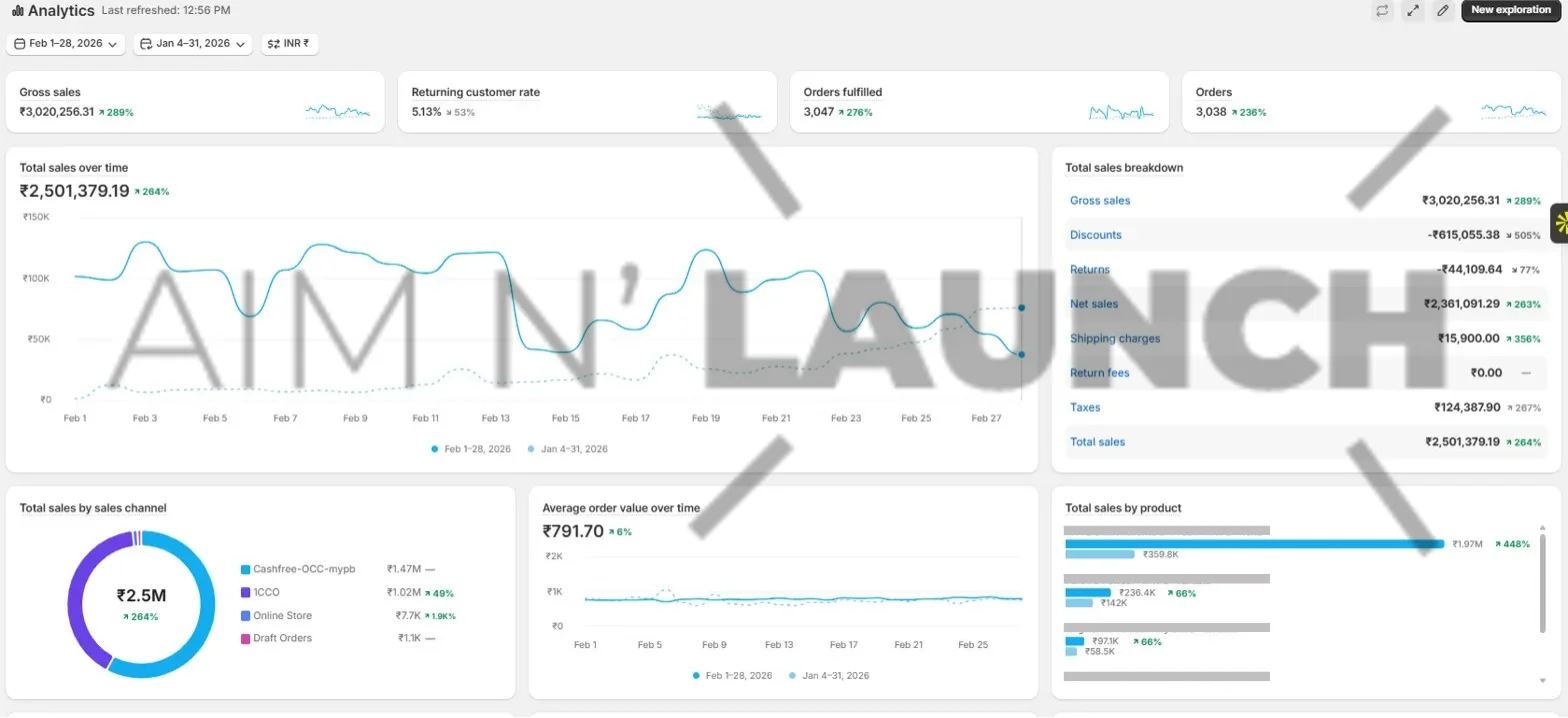
FMCG Snacks Brand (India) — 31 days • ₹11,22,028 total sales • 1,265 orders • AOV ₹887 • +498% sales vs prior • +297% sessions • +319% orders

VIEW MORE CASE STUDY
FMCG Snacks Brand Case Study

334% Revenue Growth in 30 Days • How we scaled a coconut water powder D2C brand past their ₹8L target, hitting ₹10.5L in a single month.

VIEW MORE CASE STUDY
Coconut Water Powder Brand Case Study

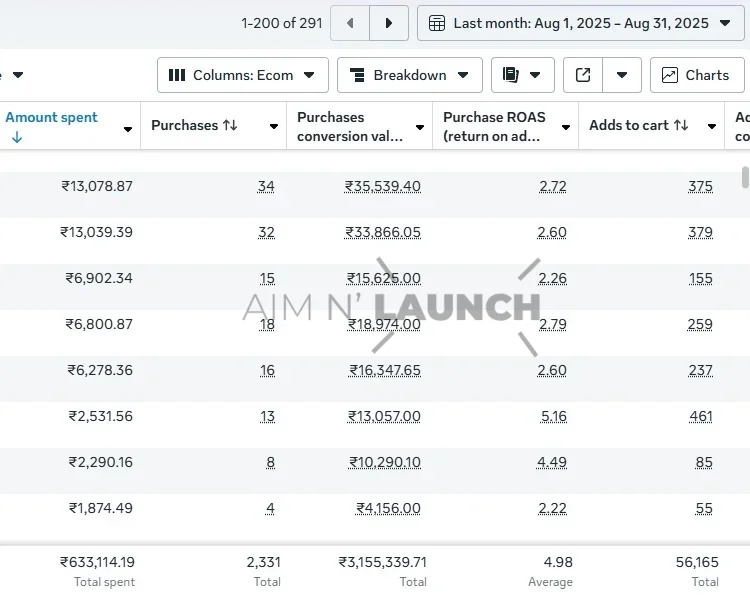
Fashion Brand (India) — 31 days • ₹42,33,340 tracked revenue (₹31,55,340 Meta + ₹10,78,000 SEO) • 4.98× ROAS on Meta • 2,331 purchases • AOV ₹1,354 • MER 6.69×

VIEW MORE CASE STUDY
Fashion Brand Case Study

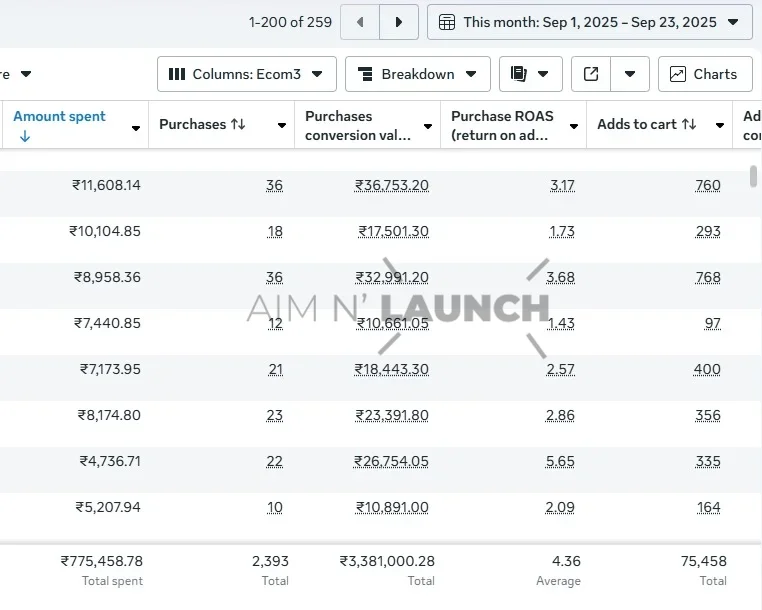
Nutrition & Wellness brand scaled to ₹3.4Cr revenue in 23 days at 4.36 ROAS with a defendable AOV strategy.

VIEW MORE CASE STUDY
Nutrition and Wellness Brand Case Study

The Scale-Up Journey of a Shark Tank Featured Healthy Snacks Brand. How we took a protein snacking brand from ₹7.8L to ₹30.2L in gross sales in a single month, with a 2.87% conversion rate and 6% AOV lift.

VIEW MORE CASE STUDY
Shark Tank Healthy Snacks Brand Case Study

Our Ecommerce SEO Services

Ecommerce Technical SEO Audit

Everything starts with an audit. Not a surface-level automated report, but a manual deep dive into your site’s technical foundation. We check crawlability (are search engines even seeing all your important pages?), indexation (how many of your pages are actually in Google’s index vs. how many should be?), site speed (especially on mobile), Core Web Vitals, schema markup, and URL structure.

For Shopify stores specifically, we look at Liquid template bloat, app-generated JavaScript overhead, collection page pagination issues, the /collections/all crawl trap, and whether your theme is generating unnecessary duplicate URLs for product variants.

You get a prioritized action plan. Not a 100-page PDF of every possible issue, but a clear “fix these 10 things first and here is why” document with specific instructions your developer can execute.

Product Page SEO Optimization

Your product pages are where revenue happens. We optimize every element that search engines and buyers care about: unique product descriptions (not copy-pasted from the manufacturer), image alt text with relevant keywords, product schema markup (price, availability, reviews show up directly in search results), internal linking from category pages to products and from products to related products.

We also look at what most SEO agencies completely ignore on product pages: the content below the fold. Customer reviews, FAQ sections specific to the product, usage guides, and comparison tables. These elements increase time on page, answer objections, and give Google more text to understand what the page is about.

Category and Collection Page SEO

This is where the real money is in ecommerce SEO. Your collection pages (like “/collections/vitamin-c-serums” or “/collections/whey-protein”) target the highest-intent, highest-volume commercial keywords. But most Shopify stores have collection pages with nothing but a product grid. No description, no heading structure, no content for Google to rank.

We write collection page content that serves two purposes: it helps Google understand what the page is about and rank it for relevant keywords, and it helps the buyer navigate the category with confidence. Think of it as a smart, concise buying guide that sits above or below the product grid.

We also handle filter URL management. When someone filters your products by “price under ₹500” or “fragrance free,” the resulting URL should either be indexable (if it targets a real keyword) or noindexed (if it creates thin duplicate content). Getting this wrong is one of the most common technical SEO mistakes in ecommerce.

Ecommerce Content Strategy

We build content strategies that work as a system, not random blog posts published because “we need to post something this week.”

The system works like this: blog content targets problem-aware and solution-aware keywords (people researching before buying), and that content links to your product and category pages (where people actually buy). Every blog post we write has a clear job: bring the right traffic and push it toward a purchase.

Examples for a skincare D2C brand: – “How to build a nighttime skincare routine for oily skin” (links to your cleanser, serum, and moisturizer product pages) – “Niacinamide vs Vitamin C: which one should you use first?” (links to your niacinamide and vitamin C collection pages) – “Why your sunscreen is pilling and how to fix it” (links to your sunscreen product page)

Every piece is keyword-targeted, India-specific (we account for Indian climate, skin concerns, and budget ranges), and written to convert readers into customers.

Link Building for Ecommerce

Backlinks still matter. But the kind of backlinks matter more than the quantity. We do not submit your site to 500 directories or create fake Web 2.0 profiles. That approach stopped working years ago and can actively hurt your site.

Instead, we focus on editorial links: getting your brand or products mentioned in real publications, product roundups, gift guides, and industry articles. We pitch D2C and ecommerce publications, lifestyle blogs, and niche review sites. We also look for link opportunities from your existing relationships: suppliers, partners, industry associations, and event sponsorships.

For Indian ecommerce brands, we target placements on Inc42, YourStory, Economic Times Brand Equity, and niche publications in your product category. These links carry real authority and drive referral traffic alongside SEO value.

Shopify SEO

Shopify is our primary platform. We know its quirks inside out.

Shopify creates duplicate URLs by default (/products/item-name and /collections/collection-name/products/item-name). This needs canonical tag management. Shopify’s built-in blog is basic, but workable with the right template customizations. Shopify themes vary wildly in their SEO friendliness, and most “fast” themes still load 400KB+ of JavaScript. Shopify does not give you direct access to robots.txt or server-side redirects the way WordPress does, so you need workarounds.

We handle all of this. If you are on Shopify, we know exactly what to fix, what to leave alone, and what to work around.

WooCommerce SEO

If you are on WooCommerce, we handle the WordPress-specific challenges: plugin conflicts that break schema markup, database bloat that slows your site, security vulnerabilities that can tank your rankings overnight, and the hosting decisions that make or break your page speed.

WooCommerce gives you more technical control than Shopify, which is both an advantage and a risk. More control means more things to get wrong. We make sure your WooCommerce store is technically sound so SEO work actually sticks.

Local SEO for Ecommerce Brands

If you have a physical store, warehouse, or office alongside your ecommerce store, local SEO can drive foot traffic and build trust. We optimize your Google Business Profile, manage local citations (consistent NAP across directories), and target location-specific keywords.

Even pure-play ecommerce brands benefit from local SEO signals. Having a verified GBP listing with reviews adds credibility for branded searches and helps you show up in “near me” queries from nearby customers.

Our Process: From Audit to Revenue

Month 1: Discovery and Foundation

We start with a full technical and content audit of your ecommerce site. We pull data from Google Search Console, Google Analytics 4, and your Shopify/WooCommerce backend. We map every indexed page, identify technical issues, and build a keyword landscape showing where you currently rank, where your competitors rank, and where the gaps are.

By the end of month 1, you have a complete SEO strategy document with prioritized actions and projected timelines.

Month 2-3: On-Page Sprint

This is where the heavy lifting happens. We optimize title tags and meta descriptions across your priority product and category pages. We write or rewrite collection page content. We fix technical issues identified in the audit. We set up proper schema markup for products, reviews, FAQ, and breadcrumbs. We clean up internal linking so your most important pages get the most link equity.

Month 4-6: Content and Links

With the technical foundation solid, we shift to content creation and link building. We publish 4-8 pieces of content per month targeting keywords from the strategy. Each piece is written in-house (not outsourced to a content mill), reviewed for keyword optimization, and linked to relevant product and category pages.

Simultaneously, we run link building campaigns: pitching publications, securing product mentions, and earning editorial links.

Ongoing: Optimize and Compound

SEO is not a one-time project. We provide monthly reporting tied to organic revenue (not just rankings and traffic), identify new keyword opportunities as your product line grows, update existing content to maintain rankings, and adjust strategy based on what the data shows.

Ecommerce SEO Pricing

We are transparent about how we structure pricing, even if we do not publish exact numbers.

SEO Audit Only (One-Time) A comprehensive audit with a prioritized action plan. Ideal if you have an in-house team that can execute but need expert direction. Deliverable: a detailed report your developers and content team can act on immediately.

Growth Plan (Monthly Retainer) For brands doing ₹10-50 lakh/month in revenue. Includes ongoing technical SEO, on-page optimization, content strategy and creation, and link building. This plan is designed for brands that want to build a serious organic channel alongside paid.

Scale Plan (Monthly Retainer) For brands doing ₹50 lakh+/month in revenue. Everything in the Growth plan plus aggressive content velocity, advanced link building, and integration with your paid ads strategy for full-funnel keyword coverage.

Pricing depends on your store size (number of products and categories), current organic baseline, competitive landscape, and the scope of work needed. We will give you a specific quote after the initial audit call.

Results That Actually Matter

Skincare D2C Brand

Organic traffic increased 185% in 8 months. More importantly, organic revenue grew 220% because we focused on commercial intent keywords, not just informational traffic. We optimized 45 product pages, wrote collection page content for 12 key categories, and published 24 blog posts targeting problem-aware searches. The brand now gets 30% of its total revenue from organic, reducing its dependence on paid ads significantly.

Health Supplements Brand

The brand had 200+ product pages but only 15 were getting any organic traffic. The problem: duplicate content across product variants, missing schema markup, and zero internal linking strategy. In 6 months, we fixed the technical issues, optimized the top 50 product pages, built a content hub around their primary supplement categories, and earned 18 editorial links from health and fitness publications. Result: organic traffic up 140%, organic revenue up 170%.

Fashion Brand

This brand’s Shopify store loaded in 6.8 seconds on mobile. Nobody was buying from organic traffic because nobody was waiting for the page to load. We stripped out 8 unnecessary apps, optimized images, switched to a lighter theme framework, and got load time down to 2.4 seconds. Combined with on-page SEO work, organic conversion rate improved from 0.6% to 1.8% and organic revenue tripled in 5 months.

Frequently Asked Questions

How long does ecommerce SEO take to show results?

You should see initial improvements in rankings and traffic within 3-4 months. Significant revenue impact typically takes 6-8 months. SEO is a compounding channel. It starts slow and accelerates over time. Month 1 is foundation work. Months 2-4 are optimization. Months 5+ are when the compounding starts to show in your revenue.

What is the cost of ecommerce SEO services in India?

Ecommerce SEO from a specialist agency in India typically ranges from ₹40,000 to ₹2,00,000+ per month depending on store size, competition, and scope. Agencies charging ₹10-15k/month are either outsourcing to unqualified writers or doing surface-level work that will not move the needle. Serious ecommerce SEO requires serious investment, but the ROI compounds over time in a way that paid ads never will.

Do you work with Shopify, WooCommerce, or custom stores?

Yes to all three. Shopify is our primary platform (80%+ of our clients are on Shopify), but we have deep experience with WooCommerce as well. For custom-built stores, we work with your development team to implement SEO recommendations. We have platform-specific SOPs for each.

How is ecommerce SEO different from regular SEO?

Ecommerce sites have unique challenges: thousands of product pages that need unique content, category/collection pages that target commercial keywords, faceted navigation that creates duplicate URLs, out-of-stock product handling, seasonal inventory changes, and product variant URLs. A regular SEO agency does not have playbooks for these issues. We do.

Can SEO reduce my dependence on paid ads?

Absolutely. That is one of the main reasons brands invest in SEO. Every customer who finds you through Google organic search is a customer you did not pay Meta or Google Ads for. Over time, organic can become 25-40% of your total revenue, dramatically improving your overall customer acquisition cost and profitability.

What KPIs do you track for ecommerce SEO?

Organic revenue (the number that matters most), organic traffic, keyword rankings for commercial intent terms, organic conversion rate, product and category page visibility, and click-through rate from search results. We report monthly, and every metric ties back to revenue. We do not send reports full of keyword counts and backlink numbers with no connection to your business outcomes.

Do you write product descriptions?

Yes. Unique, SEO-optimized product descriptions are a core part of our service. We write descriptions that serve both search engines and buyers: keyword-rich without being stuffed, benefit-focused, and structured with the information Indian buyers need to make a purchase decision (ingredients, usage, size, shipping info).

How do you handle duplicate content on ecommerce sites?

Through a combination of canonical tags (telling Google which version of a page is the “official” one), noindex directives on filtered and paginated URLs that should not be in the index, and unique content creation for pages that need to be indexed. On Shopify specifically, we handle the default duplicate URL issue (/products/ vs /collections/…/products/) through proper canonicalization.

What tools do you use for ecommerce SEO?

Google Search Console and GA4 for performance data. Ahrefs or SEMrush for keyword research and competitor analysis. Screaming Frog for technical audits. PageSpeed Insights and GTmetrix for speed analysis. Shopify and WooCommerce backend data for page-level insights. We use tools to inform decisions, not to generate automated reports we slap our logo on.


Is ecommerce SEO worth it for a small D2C brand?

Yes, but with realistic expectations. If you are doing under ₹5 lakh/month in revenue, start with the basics: fix technical issues, optimize your top 10-15 product pages, and write collection page content. You do not need a ₹1.5 lakh/month SEO retainer at that stage. You need a solid audit and a focused execution plan. We offer one-time audits for this exact reason.

Start With a Free SEO Audit

We will look at your ecommerce store and tell you exactly what is holding back your organic growth. No generic automated report. A real, manual analysis of your technical foundation, content gaps, and keyword opportunities.

You will know within 30 minutes whether investing in ecommerce SEO makes sense for your brand right now, and if it does, exactly where to start.