Ecommerce Web Design Services That Convert Browsers Into Buyers

A beautiful store that does not sell is just an expensive portfolio piece.

We have seen it happen dozens of times. A D2C founder spends ₹2-3 lakh on a gorgeous Shopify store. The homepage looks like a magazine cover. The product photos are stunning. The brand fonts are perfect. And the conversion rate sits at 0.8% because nobody thought about what actually makes people buy.

Design is not art. At least not in ecommerce. Ecommerce web design is engineering. It is about removing every point of friction between a visitor landing on your page and completing a purchase. Every button placement, every trust signal, every line of copy, every millisecond of load time either moves people toward checkout or pushes them away.

We are Aim n Launch, a Delhi-based agency that designs and builds ecommerce stores for D2C brands. We work primarily on Shopify. And every design decision we make ties back to one metric: conversion rate.

Book Free Strategy Call

Why Most Ecommerce Stores in India Do Not Convert

The average Shopify store in India converts at somewhere between 1.5% and 2%. That means for every 100 visitors you pay to bring to your site, 98 leave without buying. Most of that leakage is not because of your product. It is because of your website.

Here are the specific problems we see over and over again.

Designed for desktop, used on mobile

Over 80% of D2C traffic in India comes from mobile devices. But most store designs are still built desktop-first and then “made responsive” as an afterthought. This results in product images that are too small on phone screens, text that is unreadable without zooming, buttons that are too close together for thumbs, and a checkout process that feels like filling out a tax form on a 6-inch screen.

Your store needs to be designed mobile-first. Not “responsive.” Mobile-first. That means the design starts on a phone screen and scales up to desktop, not the other way around.

Checkout is not built for Indian buyers

Around 60-65% of ecommerce orders in India are still Cash on Delivery. Your checkout flow needs to handle this reality, not fight it. We see stores that bury the COD option three clicks deep, stores that show no prepaid incentive (a ₹50-75 discount for UPI payment can shift 15-25% of orders from COD to prepaid), and stores that force account creation before checkout, which kills conversion rates.

The checkout also needs to integrate cleanly with Indian payment gateways: Razorpay, PayU, Cashfree, PhonePe, Google Pay, and UPI. Not just Stripe and PayPal, which many international themes are built for.

Product pages are missing what Indian buyers need

Indian ecommerce buyers are trust-deficit buyers. This is not a criticism. It makes complete sense in a market where fake products, misleading descriptions, and unreliable delivery are common concerns. Your product page needs to address these concerns directly:

  • Expected delivery date (not just “ships in 2-3 days” but a pin code based estimate)
  • Clear return and exchange policy visible without scrolling
  • Real customer reviews (not imported reviews, not fake 5-star reviews)
  • Trust badges: secure payment, authentic product guarantee, easy returns
  • Price transparency: total cost including any shipping charges shown upfront

Most Shopify themes do not include these elements by default. They need to be designed and built in.

Slow loading kills everything

Google data says 53% of mobile visitors leave a site that takes longer than 3 seconds to load. The average Shopify store in India loads in 4-6 seconds on mobile, sometimes longer. The culprits are almost always the same: unoptimized product images (2-5MB each instead of 100-200KB), too many Shopify apps (each one adds JavaScript that loads on every page), heavy theme with animations and sliders nobody asked for, and no lazy loading for below-the-fold images.

Speed is not a nice-to-have. It is the first conversion optimization you should make. A one-second improvement in load time can increase conversion rate by 7-10%.

No strategy for increasing average order value

Most stores display products, let people add to cart, and hope for the best. There is no upsell suggestion on the product page, no cross-sell in the cart, no bundle offer, no “frequently bought together” section, and no minimum order incentive for free shipping. These elements are not annoying pop-ups. Done right, they feel helpful and increase your average order value by 20-40%, which directly improves your profitability on every order.

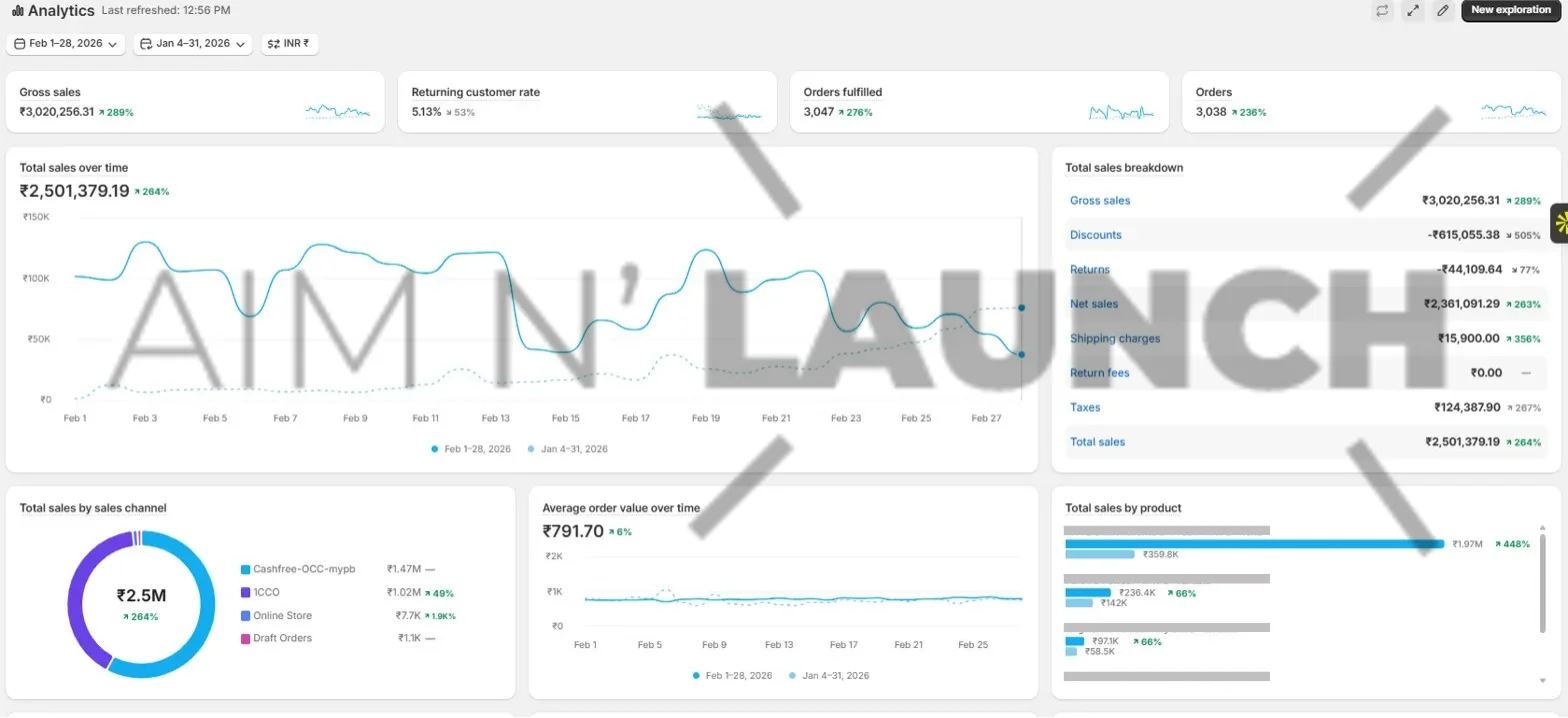
Brands we grow.

OUR CLIENTS EXPERIENCE
UNCOMFORTABLE ORGANIC GROWTH

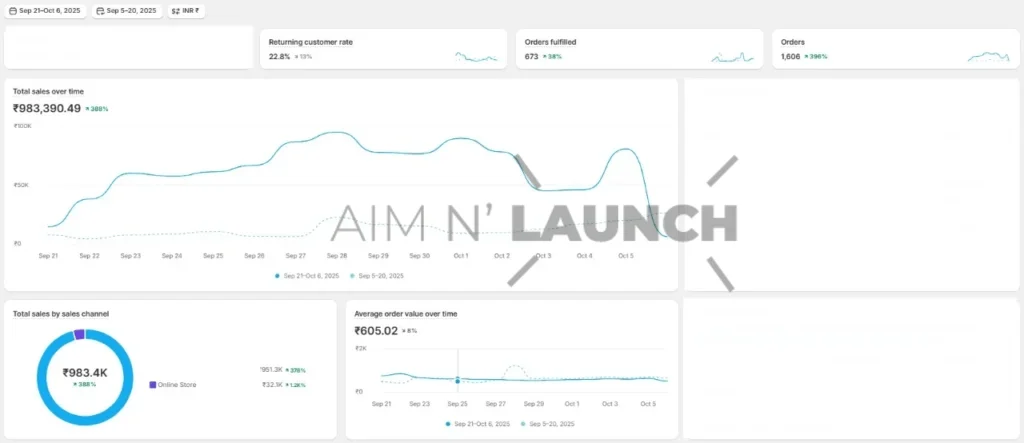
FMCG Hydration Brand: 16 days • ₹9.62L Net sales • 1,606 orders • AOV ₹605 • Returning 22.8% • +382% net vs prior period

VIEW MORE CASE STUDY
FMCG Hydration Brand Case Study

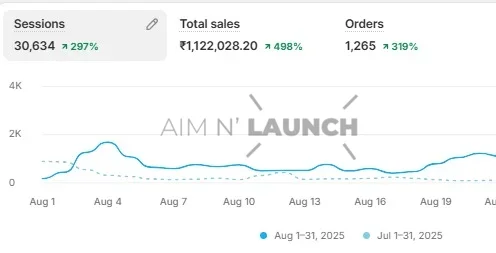
FMCG Snacks Brand (India) — 31 days • ₹11,22,028 total sales • 1,265 orders • AOV ₹887 • +498% sales vs prior • +297% sessions • +319% orders

VIEW MORE CASE STUDY
FMCG Snacks Brand Case Study

334% Revenue Growth in 30 Days • How we scaled a coconut water powder D2C brand past their ₹8L target, hitting ₹10.5L in a single month.

VIEW MORE CASE STUDY
Coconut Water Powder Brand Case Study

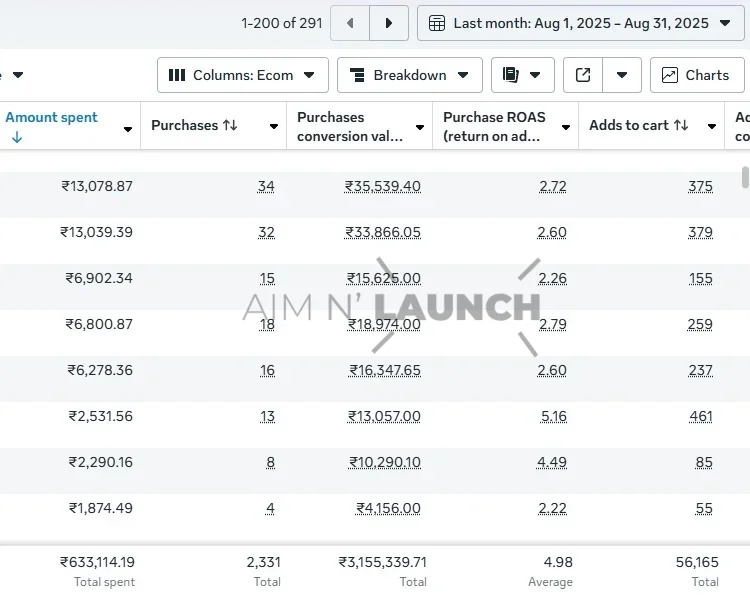
Fashion Brand (India) — 31 days • ₹42,33,340 tracked revenue (₹31,55,340 Meta + ₹10,78,000 SEO) • 4.98× ROAS on Meta • 2,331 purchases • AOV ₹1,354 • MER 6.69×

VIEW MORE CASE STUDY
Fashion Brand Case Study

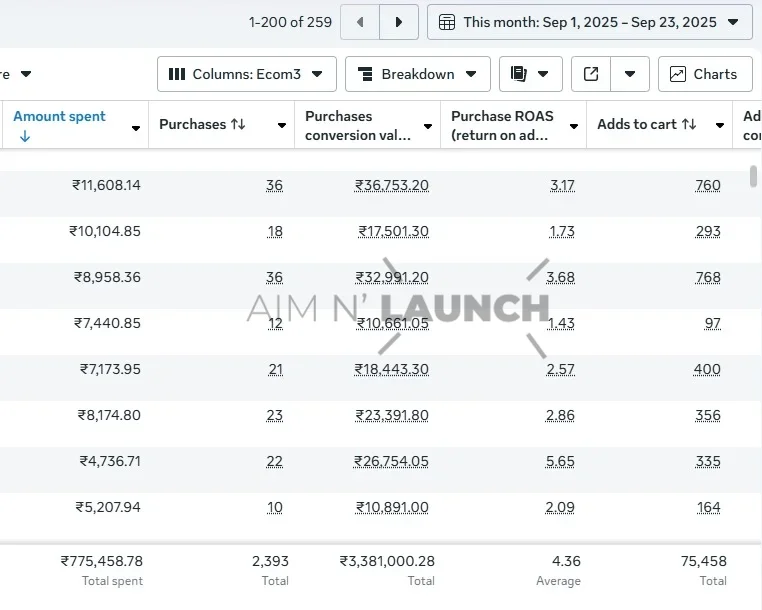
Nutrition & Wellness brand scaled to ₹3.4Cr revenue in 23 days at 4.36 ROAS with a defendable AOV strategy.

VIEW MORE CASE STUDY
Nutrition and Wellness Brand Case Study

The Scale-Up Journey of a Shark Tank Featured Healthy Snacks Brand. How we took a protein snacking brand from ₹7.8L to ₹30.2L in gross sales in a single month, with a 2.87% conversion rate and 6% AOV lift.

VIEW MORE CASE STUDY
Shark Tank Healthy Snacks Brand Case Study

Our Ecommerce Web Design Services

Shopify Store Design and Development

Shopify is our primary platform. We build new stores from scratch and redesign existing ones. But we do not just install a premium theme, change the colors to match your brand, and call it done. That is what ₹15-20k Shopify “agencies” do.

We build custom section architectures using Shopify 2.0 that give you full control over your homepage, collection pages, and product pages without needing a developer every time you want to make a change. We optimize for speed from day one by choosing lightweight theme foundations, implementing proper image optimization, and being ruthless about which apps make it into the final build.

Every store we build is mobile-first, fast-loading, and designed around your specific product category and buyer behavior. A fashion store needs a different layout than a supplements store, which needs a different layout than a food brand. We do not use the same template for everyone.

Product Page Design

The product page is where the buying decision happens. It is the most important page on your entire store, and most brands treat it as an afterthought.

Our product page design process focuses on:

Above the fold: Product image gallery (optimized for mobile swipe), product title, price (with any discounts shown clearly), key benefit bullets (3-4 maximum), size/variant selector, add-to-cart button (sticky on mobile so it is always visible), and delivery estimate based on pin code.

Trust section: Customer reviews with photos, trust badges (secure checkout, genuine product, easy returns), and a clear return policy statement. Indian buyers specifically look for these before they trust a new brand enough to buy.

Details section: Full product description, ingredients or specifications, how to use, and FAQ specific to that product. This section also serves SEO purposes by giving Google more content to understand the page.

Social proof: UGC photos from real customers, Instagram embeds if relevant, and “as seen on” media mentions if you have them.

Upsell section: “Frequently bought together” bundle, “You might also like” product recommendations, and a minimum order nudge for free shipping if applicable.

Category and Collection Page Design

Your collection pages are where browsers become buyers. Someone searching “vitamin C serum” on Google and landing on your collection page is already interested in the category. The page design needs to help them find the right product fast.

We design collection pages with: – A short, SEO-optimized introduction that helps both Google and the buyer understand the category – Clean product cards that show the most important info at a glance (image, name, price, star rating, key benefit) – Filters that actually work on mobile (most Shopify filter implementations are terrible on phones) – Sort options that match how your buyers think (price low to high, bestselling, newest, highest rated) – Quick-view capability so buyers can get product details without leaving the collection page

Checkout and Cart Optimization

The cart and checkout pages are where you either capture the sale or lose it. We design these with Indian buyer behavior in mind:

Cart page: Clear product summary with images, easy quantity adjustment, estimated delivery date, shipping cost displayed upfront (no surprise charges at checkout), cart-level upsell or cross-sell suggestion, and a clear path to checkout.

Checkout optimization: COD and prepaid options with prepaid incentive displayed prominently, UPI deep link integration for one-tap payment, address autofill with pin code validation, minimal form fields (name, phone, address, that is it), OTP-less login or guest checkout option, and clear order summary before final confirmation.

We also optimize for reducing cart abandonment: exit intent triggers (on desktop), abandoned cart recovery via WhatsApp and email, and sticky checkout buttons on mobile.

Mobile-First Responsive Design

We do not “make the desktop site responsive.” We design for mobile first because that is where your customers are.

Mobile-first design means: thumb-zone navigation (important buttons placed where thumbs naturally rest), sticky add-to-cart bar that follows the user as they scroll, swipeable product image galleries, tap-friendly filter and sort controls, compressed images that load fast on 4G connections, and a checkout flow that requires minimal typing.

We test every store on actual Android devices across different screen sizes, not just in Chrome’s device emulator. Because real-world mobile experience is different from what simulators show.

Ecommerce Website Redesign

Already have a store that is not converting? We start with a data-driven audit before we change a single pixel.

We look at your GA4 data to understand where visitors drop off. We check heatmaps (if you have Hotjar or similar) to see how people actually use your current site. We analyze your top exit pages, your cart abandonment rate, and your checkout completion rate. Then we build a redesign plan that addresses the specific problems your data reveals, not just what we think “looks better.”
A redesign without data is just redecorating. A redesign with data is a conversion optimization project that happens to include new visuals.

Our Design Process

Step 1: Discovery and Audit (Week 1)

We start by understanding your brand, your products, and your customers. If you have an existing store, we audit it: GA4 data, conversion rates by page, site speed metrics, mobile vs desktop performance, and top exit points. If you are building from scratch, we study your competitors, your product category, and your target buyer.

By the end of week 1, we have a clear picture of what needs to be built (or rebuilt) and why.

Step 2: Wireframing (Week 2)

We create mobile-first wireframes for every key page: homepage, product page, collection page, cart, and checkout. Wireframes are about structure and user flow, not visuals. Where does each element go? What information does the buyer need at each point? What action do we want them to take next?

You review and approve the wireframes before we move to visual design. This saves time and money because it is much easier to move boxes on a wireframe than to redesign finished pages.

Step 3: Visual Design (Week 3-4)

With wireframes approved, we create the visual design: colors, typography, imagery style, button styles, and overall brand feel. We design 2-3 key pages first (usually homepage, product page, and collection page) for your review, then extend the design system to remaining pages after approval.

We keep designs clean and conversion-focused. No decorative elements that do not serve a purpose. No animations that slow the page down. Every visual choice has a reason behind it.

Step 4: Development and Testing (Week 4-6)

We build the store on Shopify (or WooCommerce if that is your platform). This includes custom section development, payment gateway integration (Razorpay, PayU, Cashfree, or your preferred provider), shipping integration (Shiprocket, Delhivery, or your logistics partner), and speed optimization.

Before launch, we test on multiple devices and browsers, run page speed tests, verify all payment methods work correctly, check that tracking (GA4, Meta Pixel, Google Ads) is firing properly, and do a complete walk-through of the buying journey from landing page to order confirmation.

Step 5: Launch and Optimize (Week 6+)

We handle the go-live process: DNS configuration, SSL verification, redirects from old URLs if it is a redesign, and a 48-hour post-launch monitoring period to catch any issues.

After launch, we provide 30 days of support for bug fixes and minor adjustments. For clients who want ongoing optimization, we offer a monthly retainer that includes A/B testing, conversion rate monitoring, and iterative improvements based on real user data.

Platforms We Work With

Shopify (Primary)

About 80% of our ecommerce design work is on Shopify. We choose Shopify as our primary platform because it is the best fit for most Indian D2C brands: reliable hosting, secure payments, a growing app ecosystem, and the ability to scale from ₹1 lakh/month to ₹10 crore/month without switching platforms.

We build on Shopify 2.0 using Online Store 2.0 section architecture, which gives store owners flexible, drag-and-drop control over their pages without needing developer support for every content change.

WooCommerce

For brands that need more technical control or have existing WordPress infrastructure, we build on WooCommerce. WooCommerce is more flexible than Shopify in terms of customization, but it requires more technical maintenance (hosting, security, updates). We set up WooCommerce stores with proper hosting, caching, and security configurations so they perform well and stay secure.

What We Do Not Build

We are transparent about what we do not do. We do not build on Magento, BigCommerce, Wix, or Squarespace. Not because these are bad platforms, but because spreading across too many platforms means shallow expertise on each. We would rather be excellent on two platforms than mediocre on six.

Ecommerce Web Design Pricing

We get this question often, so here is a straightforward answer.

Basic Shopify Store Setup Starting from ₹50,000. This covers theme customization, essential page design (homepage, product page, collection page, about, contact), payment gateway integration, and shipping setup. Best for brands just getting started who need a clean, functional store without heavy customization.

Custom Shopify Design ₹1,00,000 to ₹2,50,000. Includes custom wireframing, mobile-first visual design, custom Shopify 2.0 section development, speed optimization, and conversion-focused product page design. Best for established brands that need a store designed specifically around their products and buyers.

Full Redesign with CRO ₹1,50,000 to ₹3,50,000+. Includes data audit of existing store, wireframing, custom design, development, A/B testing framework setup, and 30 days of post-launch optimization. Best for brands with an existing store that is not converting well and needs a data-driven overhaul.

The exact price depends on your product count, design complexity, custom functionality requirements, and timeline. We provide a specific quote after an initial consultation where we understand your needs.

One note on pricing: a ₹15,000 Shopify store will look and perform like a ₹15,000 Shopify store. If your store is the foundation of a D2C brand that aims to do ₹50 lakh+ per month in revenue, investing in design that actually converts is not an expense. It is the highest-ROI decision you will make.

Frequently Asked Questions

How much does ecommerce web design cost in India?

For a professional, conversion-focused ecommerce store, expect to invest between ₹50,000 and ₹3,50,000+ depending on complexity. Basic Shopify setups with theme customization start at the lower end. Fully custom designs with wireframing, mobile-first development, and CRO optimization sit at the higher end. We provide specific quotes after understanding your requirements.

How long does it take to design an ecommerce website?

A basic Shopify store setup takes 2-3 weeks. A custom design project takes 4-6 weeks from kickoff to launch. A full redesign with data audit takes 5-8 weeks. These timelines assume prompt feedback on design reviews. Delays in feedback add directly to the project timeline.

Do you only work with Shopify?

Primarily Shopify, yes (about 80% of our projects). We also work with WooCommerce for brands that have specific reasons for being on WordPress. We do not work with Magento, BigCommerce, Wix, or Squarespace. Our focus on two platforms means we have deep expertise rather than surface-level familiarity.

Can you redesign my existing store without losing SEO rankings?

Yes, and this is something we take very seriously. We map all existing URLs before the redesign, set up proper 301 redirects for any URLs that change, preserve meta titles and descriptions, and maintain your internal linking structure. We also monitor Google Search Console closely after launch to catch any indexation issues quickly.

Do you handle product photography or content?

We do not shoot product photos, but we provide detailed photography guidelines (image dimensions, background specifications, angles needed, lifestyle shot direction) that your photographer or team can follow. For product descriptions and page copy, yes, we write conversion-focused content as part of our design projects.

What if I need changes after launch?

Every project includes 30 days of post-launch support for bug fixes and minor adjustments. Beyond that, we offer monthly maintenance retainers for ongoing updates, new page creation, and iterative improvements. Or you can engage us on a per-request basis for specific changes.

Do you offer ongoing maintenance?

Yes. Shopify stores need regular attention: app updates, speed monitoring, new product page creation, seasonal campaign pages, and occasional theme adjustments. Our maintenance retainer covers all of this so you do not need a full-time developer on staff.

Can you build a store that works well with Meta Ads?

This is actually one of our strengths because we also run Meta Ads for D2C brands. We know exactly what a high-converting ad landing page needs: fast loading, message match with the ad creative, prominent offer display, social proof, and a clear path to purchase. When we build a store, we design dedicated landing page templates for ad campaigns alongside the standard store pages.

What makes a good ecommerce website design?

Three things: speed, trust, and friction reduction. Speed means the site loads in under 3 seconds on mobile. Trust means the buyer feels confident that the product is real, the brand is legitimate, and the payment is secure. Friction reduction means every unnecessary step, click, or form field between the buyer and the purchase has been eliminated. Good design is invisible. When everything works, the buyer does not notice the design. They just buy.

Do you integrate with Shiprocket, Razorpay, and other Indian tools?

Yes. We integrate with the full Indian ecommerce stack: Shiprocket, Delhivery, and other shipping providers for order fulfillment and tracking. Razorpay, PayU, Cashfree, and PhonePe for payment processing. GoKwik or Pragma for COD risk management. Klaviyo, WebEngage, or Wigzo for email and WhatsApp marketing. We set up these integrations as part of the store build, not as an afterthought.

Your Store Is Either Helping You Sell or Getting in the Way

There is no middle ground. Every day your store loads slowly, displays poorly on mobile, or makes checkout harder than it should be, you are losing sales that your ads already paid to generate. That is money you spent to bring someone to your store, only for your store to push them away.


We will look at your current store (or your requirements for a new one) and tell you exactly what is costing you conversions and what it would take to fix it. No design jargon. No generic proposals. Just a clear assessment of where you are and where you need to be.