Ecommerce Google Ads That Sell Products, Not Just Generate Clicks

Google Ads is the only channel where your customer tells you exactly what they want to buy. They literally type it into a search box. “Buy protein powder 1kg whey isolate.” “Vitamin C serum for oily skin price.” “Best running shoes under 5000.”

These are not people browsing. They are people ready to buy. And if your products are not showing up when they search, someone else’s products are.

But here is where most ecommerce brands in India get Google Ads wrong. They either run generic Search campaigns with broad match keywords that waste budget on irrelevant clicks. Or they throw everything into Performance Max, hand Google full control, and hope the algorithm figures it out. Or worse, they try to run it themselves, burn through ₹2-3 lakh, see no clear return, and conclude that “Google Ads does not work for ecommerce.”

Google Ads works incredibly well for ecommerce. It just requires someone who knows the specific mechanics of shopping campaigns, product feed optimization, and margin-based bidding to make it profitable.

We are Aim n Launch. We manage Google Ads for D2C and ecommerce brands spending ₹5 lakh and above per month. Our specialty is turning Google into a predictable, profitable revenue channel alongside your Meta Ads.

Book Free Strategy Call

Why Google Ads Is Different From Meta Ads (And Why You Need Both)

Most D2C brands in India start with Meta Ads. Makes sense. Facebook and Instagram are where you create demand. You show your product to people who did not know they needed it, and some of them buy. Meta is a discovery engine.
Google is a capture engine. People come to Google already knowing what they want. Your job is to show up in front of them at that exact moment. The conversion rates are typically higher on Google because the intent is already there. On Meta, you might see 1.5-2% conversion rates on cold traffic. On Google Shopping, 3-5% conversion rates are normal for well-optimized campaigns.

But here is the strategic reason you need both. Meta builds demand and awareness. Someone sees your ad on Instagram, checks out your product, maybe saves it or visits your website, but does not buy immediately. Later that day or the next week, they go to Google and search for your product or category. If your Google Shopping ad shows up, you capture that sale. If it does not, your competitor captures it. Or worse, Amazon captures it.

This is why we manage both Meta and Google for most of our clients. The data flows between channels. We use Google Ads search term reports to discover high-converting keywords, and we use that data to inform both our Google and our Meta creative strategy. We use Meta audience insights to understand what product angles resonate, and we use that to optimize Google Shopping product titles and descriptions.

Running these channels in isolation, with different agencies or different internal teams who do not talk to each other, is one of the most common and most expensive mistakes ecommerce brands make.

Brands we grow.

OUR CLIENTS EXPERIENCE
UNCOMFORTABLE ORGANIC GROWTH

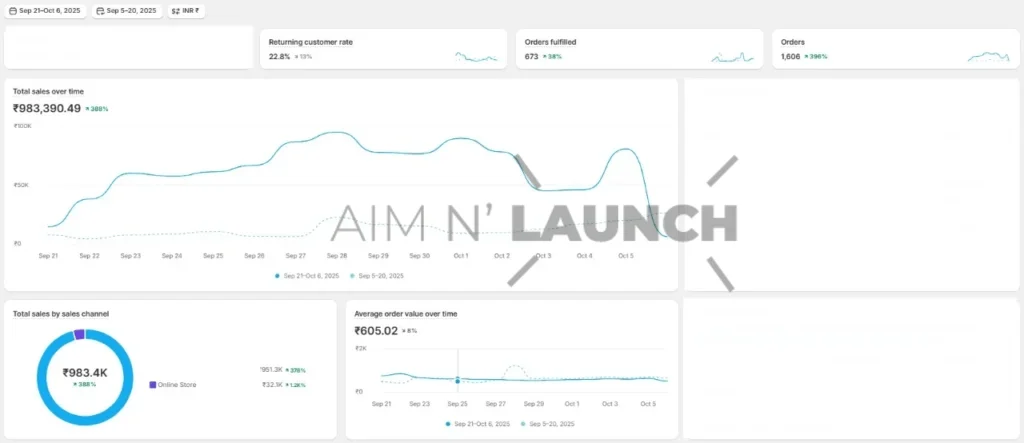
FMCG Hydration Brand: 16 days • ₹9.62L Net sales • 1,606 orders • AOV ₹605 • Returning 22.8% • +382% net vs prior period

VIEW MORE CASE STUDY
FMCG Hydration Brand Case Study

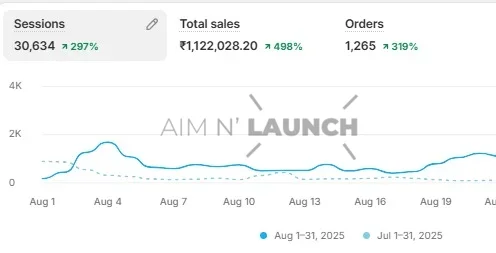
FMCG Snacks Brand (India) — 31 days • ₹11,22,028 total sales • 1,265 orders • AOV ₹887 • +498% sales vs prior • +297% sessions • +319% orders

VIEW MORE CASE STUDY
FMCG Snacks Brand Case Study

334% Revenue Growth in 30 Days • How we scaled a coconut water powder D2C brand past their ₹8L target, hitting ₹10.5L in a single month.

VIEW MORE CASE STUDY
Coconut Water Powder Brand Case Study

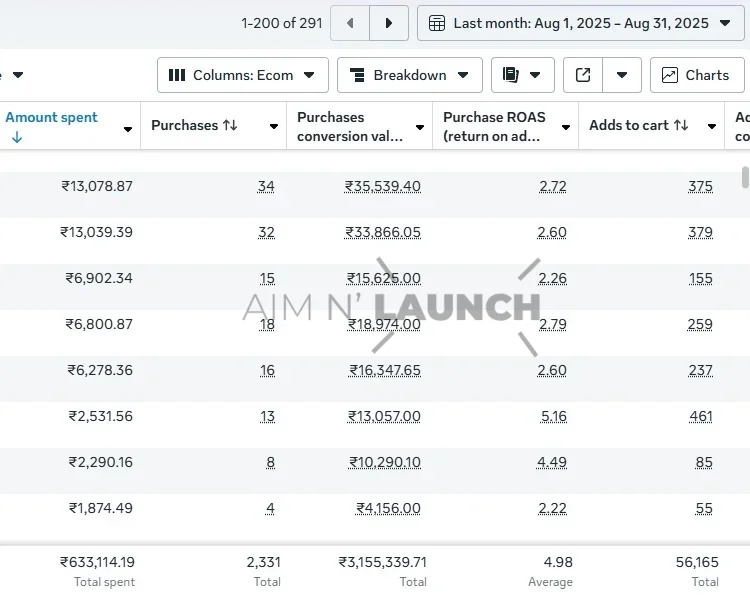
Fashion Brand (India) — 31 days • ₹42,33,340 tracked revenue (₹31,55,340 Meta + ₹10,78,000 SEO) • 4.98× ROAS on Meta • 2,331 purchases • AOV ₹1,354 • MER 6.69×

VIEW MORE CASE STUDY
Fashion Brand Case Study

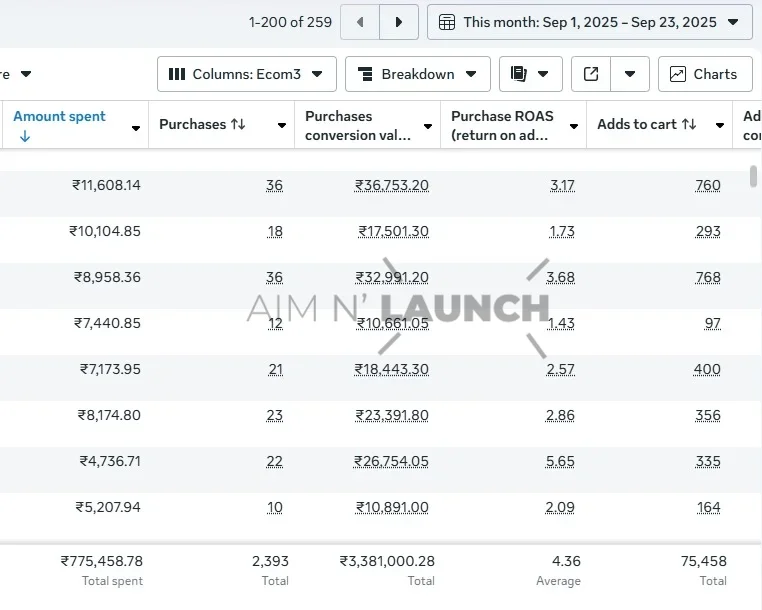
Nutrition & Wellness brand scaled to ₹3.4Cr revenue in 23 days at 4.36 ROAS with a defendable AOV strategy.

VIEW MORE CASE STUDY
Nutrition and Wellness Brand Case Study

The Scale-Up Journey of a Shark Tank Featured Healthy Snacks Brand. How we took a protein snacking brand from ₹7.8L to ₹30.2L in gross sales in a single month, with a 2.87% conversion rate and 6% AOV lift.

VIEW MORE CASE STUDY
Shark Tank Healthy Snacks Brand Case Study

How We Run Google Ads for Ecommerce Brands

Performance Max (PMAX) Campaigns

Performance Max is Google’s AI-driven campaign type that runs ads across Search, Shopping, Display, YouTube, Gmail, and Discovery all from one campaign. Google controls the targeting, bidding, and placement. You provide the assets (images, videos, headlines, descriptions) and Google does the rest.

PMAX can be incredibly powerful for ecommerce. It can also be a black box that wastes your money if set up wrong.

Our approach to PMAX: – Asset group structure: We create separate asset groups for different product categories so Google can target each one precisely. Throwing your entire catalog into one asset group is the most common mistake. – Audience signals: We feed Google signals about your best customers (email lists, website visitors, past purchasers) so PMAX knows who to target. Without signals, PMAX casts too wide a net. – Product feed quality: PMAX uses your product feed for Shopping placements. The same feed optimization we do for standard Shopping applies here. – Excluding brand searches: By default, PMAX cannibalizes your branded search traffic, which inflates ROAS numbers but does not actually generate new customers. We manage this carefully. – Budget allocation: We typically start with standard Shopping to build a data foundation, then layer in PMAX once we have enough conversion data for the algorithm to work with.

Google Shopping Campaigns

Shopping campaigns are the backbone of ecommerce Google Ads. When someone searches for a product, Shopping ads show the product image, title, price, and store name right at the top of Google. These are the most valuable clicks you can buy on Google because the buyer sees the price before they click. That means they have already self-qualified by the time they land on your product page.

The key to profitable Shopping campaigns is your product feed. Most ecommerce brands upload their Shopify product feed to Google Merchant Center and call it done. That is leaving money on the table.

We optimize every element of your feed: – Product titles: We rewrite titles to include search terms buyers actually use. Not just “Red Cotton T-Shirt” but “Men’s Red Cotton Round Neck T-Shirt Casual Wear” because that is how people search. – Product descriptions: Keyword-rich descriptions that help Google match your products to the right searches. – Product categories: Correct Google product taxonomy so your products appear in the right Shopping results. – Images: Clean, high-quality images that meet Google’s requirements and stand out in the Shopping carousel. – Pricing and availability: Real-time sync so out-of-stock products do not waste your budget. – Supplemental feeds: Additional data layers to override Shopify defaults and add custom attributes.

A well-optimized product feed can reduce your cost per click by 20-30% and increase your click-through rate by 40-60%. That is not a small edge. Over ₹5-10 lakh in monthly spend, it translates to lakhs in savings and additional revenue.

Search Campaigns

For ecommerce, Search campaigns target high-intent keywords that Shopping does not cover. Things like “best protein powder for beginners India,” “vitamin C serum vs niacinamide,” or “running shoes for flat feet review.” These are research and comparison queries where the buyer is close to a decision but has not picked a specific product yet.

We run Search campaigns to capture these mid-funnel queries and drive them to category pages or curated landing pages. Exact match and phrase match keywords with tight negative keyword lists to minimize wasted spend.

Remarketing and Retargeting

Not everyone who visits your store buys on the first visit. Remarketing brings them back. We run Display remarketing (showing your product ads on websites they browse after leaving your store), YouTube remarketing (short video ads reminding them of products they viewed), and Search remarketing (increasing bids on people who have already visited your site when they search again).

For ecommerce, dynamic remarketing is the most powerful format. It automatically shows the exact products a visitor viewed, along with similar products they might like. The conversion rates on dynamic remarketing are typically 3-5x higher than cold traffic campaigns.

Our Process for Ecommerce Google Ads

Week 1-2: Audit and Strategy

If you have an existing Google Ads account, we start with a full audit. We look at campaign structure, keyword performance, search term reports (to find wasted spend), product feed quality, conversion tracking accuracy, and budget allocation. Most accounts have 20-40% of spend going to irrelevant searches. We identify every leak.

If you are starting fresh, we build the strategy from scratch: product feed setup, Merchant Center configuration, campaign architecture, keyword research, and tracking setup (Google Ads conversion tracking, GA4, and Shopify integration).

Week 3-4: Launch and Initial Optimization

Campaigns go live. The first 2-4 weeks are about data collection. We monitor search terms daily to add negative keywords, adjust bids based on initial performance data, test different product feed optimizations, and identify which products and categories are performing best.

Month 2-3: Optimization and Scaling

With enough data, we start optimizing aggressively. We shift budget toward winning products and keywords, pause underperformers, refine audience signals for PMAX, expand to new campaign types based on what the data shows, and begin testing new asset variations.

Ongoing: Compound and Protect

Google Ads is not a “set and forget” channel. We manage accounts daily: monitoring search terms, adjusting bids, testing new creatives, managing seasonal fluctuations, responding to competitor changes, and protecting your margins. Monthly reporting shows revenue, ROAS, CM2 impact, and next-month action plan.

How We Think About ROAS for Ecommerce Google Ads

ROAS (Return on Ad Spend) is the metric every Google Ads agency talks about. And it is useful. But it is not the full picture.

A 5x ROAS on Google Ads sounds great until you realize that the product has 50% COGS, 10% shipping cost, 3% payment gateway fee, and 15% of those orders come back as RTOs. Your actual margin on that “5x ROAS” campaign might be 8-12%.

That is why we track CM2, not just ROAS. CM2 tells you what you actually keep after all variable costs. We integrate your Shopify data, shipping costs, and payment fees into our analysis so we can tell you not just which campaigns are generating revenue, but which campaigns are generating profit.

This changes everything about how we optimize. Instead of blindly scaling the campaign with the highest ROAS, we scale the campaign that generates the highest CM2. Sometimes these are the same campaign. Often they are not.

Common Google Ads Mistakes Ecommerce Brands Make

Letting Performance Max run without guardrails

PMAX is powerful but needs structure. Without proper asset groups, audience signals, and product feed optimization, PMAX will spend your budget on Display placements that look good in reports but do not drive real purchases. We see this constantly with brands that hand their budget to PMAX and wonder why the “conversions” do not match their Shopify revenue.

Ignoring the product feed

Your product feed is not just a data export. It is your sales pitch to Google’s algorithm. Bad titles, missing descriptions, incorrect categories, and low-quality images mean Google cannot match your products to the right searches. And your Shopping ads get buried.

Not running negative keywords

If you sell premium running shoes and your Search campaign shows up for “cheap running shoes under 500,” you are paying for clicks from people who will never buy your product. Most accounts we audit have 20-40% of Search spend going to irrelevant queries because nobody is actively managing negative keywords.

Measuring Google Ads in isolation

If you sell premium running shoes and your Search campaign shows up for “cheap running shoes under 500,” you are paying for clicks from people who will never buy your product. Most accounts we audit have 20-40% of Search spend going to irrelevant queries because nobody is actively managing negative keywords.

Cannibalizing branded searches

If someone searches your brand name and clicks your Google Ad, you just paid for a customer who was already coming to your store. Some brand bidding makes sense (to protect against competitors), but counting branded conversions in your overall ROAS inflates the numbers and hides the true performance of your prospecting campaigns. We separate brand and non-brand reporting.

Results From Real Ecommerce Brands

Skincare D2C Brand

Previous agency was running one PMAX campaign for the entire product catalog. ROAS at 2.1x. We restructured into product-category asset groups, optimized the product feed with search-term-enriched titles, added audience signals from their email list and Meta pixel data, and excluded branded searches from PMAX reporting. After 90 days: ROAS at 4.2x on non-brand searches. Google became the brand’s most profitable acquisition channel.

Health Supplements Brand

Brand was spending ₹8L/month on Google Ads but 60% of budget was going to Search campaigns with broad match keywords. Search term report showed thousands of rupees wasted on irrelevant queries like “free protein samples” and “protein powder side effects.” We rebuilt the campaign structure: Shopping campaigns for direct purchase intent, Search campaigns with exact match high-intent keywords, and aggressive negative keyword management. Same budget. Revenue from Google doubled. ROAS went from 1.9x to 3.8x.

Fashion Brand

Google Shopping was running but products were not showing up for key searches because the product feed had generic titles (just the internal SKU name). We rewrote 200+ product titles to include search terms buyers actually use (style, material, occasion, size descriptors). Shopping impression share increased by 180%. Click-through rate improved by 45%. Revenue from Shopping ads grew 3x in 4 months.

Frequently Asked Questions

Is Google Ads worth it for ecommerce in India?

Yes. Google captures buyers with active purchase intent. For ecommerce specifically, Google Shopping is one of the highest-ROI ad formats available. The key is proper setup: clean product feed, smart campaign structure, and margin-aware bidding. When done right, Google Ads typically delivers 3-6x ROAS for well-positioned ecommerce brands.

How much should I spend on Google Ads for ecommerce?

We recommend starting with at least ₹2-3 lakh per month for Google Ads to have enough data for optimization. Most of our clients allocate 30-50% of their total ad budget to Google, with the rest on Meta. The split depends on your product category and where your customers are in the buying journey. Some categories (supplements, electronics) are very Google-heavy. Others (fashion, beauty) lean more toward Meta.

Google Shopping vs Performance Max: which is better?

Both have a place. Standard Shopping gives you more control over bids, keywords, and placements. PMAX uses AI to optimize across all Google channels but requires proper audience signals and feed optimization to work well. We typically start with standard Shopping to build a data foundation, then layer in PMAX once we have enough conversion history. The answer is not one or the other. It is both, with the right structure.

How quickly can I see results from Google Ads?

Google Ads can generate revenue within the first week if your product feed and campaigns are set up correctly. But meaningful optimization takes 4-8 weeks of data collection. After that, performance typically improves consistently as we refine targeting, bids, and creatives based on actual conversion data.

Do you manage both Google and Meta Ads?

Yes. We believe these channels should be managed together because they influence each other. Meta builds awareness, Google captures intent. Running them with different agencies creates blind spots. We manage both and use data from each channel to improve the other.

What is your fee for Google Ads management?

Our management fees start at ₹40,000 per month for Google Ads. Exact pricing depends on ad spend level, number of product categories, and campaign complexity. We provide a specific quote after reviewing your account and business goals during the initial audit call.

Can you help set up Google Merchant Center?

Yes. Setting up Merchant Center correctly, including product feed optimization, is one of the most important steps in ecommerce Google Ads. We handle the entire setup: Merchant Center configuration, feed connection to Shopify, product data optimization, and policy compliance checks.


Do you run YouTube Ads for ecommerce?

Yes, primarily as a remarketing and awareness channel. YouTube video ads work well for product demonstrations, UGC testimonials, and brand storytelling. For most ecommerce brands, YouTube is not the primary purchase driver, but it supports the buying journey and improves performance on Search and Shopping campaigns.

Find Out What Your Google Ads Account Is Leaving on the Table

Whether you have an existing account that is underperforming or you are starting from scratch, we will show you exactly where the opportunity is. We audit your product feed, campaign structure, keyword performance, and conversion tracking. You will know within 30 minutes whether Google Ads can be a profitable channel for your store.