Shopify Development Agency That Builds Stores Engineered to Sell

There are two kinds of Shopify stores.

The first kind was built by a freelancer or a cheap agency. They installed a premium theme, changed the colors, uploaded your products, connected Razorpay, and handed it over. Total cost: ₹15-30k. Total time: one week. And it looks exactly like what it cost. Generic product pages with no trust signals. A checkout flow that was designed for American buyers, not Indian ones. A homepage slider that nobody asked for but loads an extra 2 seconds of JavaScript. And a mobile experience that makes you pinch, scroll, and squint your way through the buying process.

The second kind was built with one question in mind: what happens when a customer lands on this page from a Meta Ad at 11pm on their phone? Will they trust this brand enough to buy? Will the page load fast enough that they do not leave? Will the product page answer their questions without making them hunt for information? Will the checkout make it easy to pay with UPI, card, or COD? Will they leave with one product or three?

We build the second kind.

Aim n Launch is a Shopify development agency based in Delhi. We build and optimize Shopify stores exclusively for D2C and ecommerce brands in India. Every store we build is mobile-first, speed-optimized, and designed around one metric: conversion rate.

Book Free Strategy Call

Why Your Shopify Store Is Probably Costing You Sales

If you are running paid ads and sending traffic to a Shopify store that converts at 1-1.5%, you are paying for 99 visitors who leave for every one who buys. Most of those lost sales are not because your product is wrong. They are because your store is getting in the way.

Here are the specific problems we see in almost every D2C Shopify store we audit.

Speed kills more sales than anything else

The average Shopify store in India loads in 4-6 seconds on mobile. Google data shows that 53% of mobile visitors abandon a site that takes longer than 3 seconds. Do the math. If your store takes 5 seconds to load, you are losing more than half your visitors before they even see your homepage.

The causes are almost always the same: uncompressed product images (2-5MB each when they should be 100-200KB), too many Shopify apps (each one injects JavaScript that loads on every page), a heavy theme with animations, carousels, and video backgrounds nobody asked for, and web fonts loading from external servers.

We obsess over speed. Every store we build targets under 3 seconds on mobile, on a real 4G connection, not on your office WiFi.

The checkout was not built for Indian buyers

This is the single biggest conversion killer for D2C brands in India, and almost nobody talks about it.

60-65% of ecommerce orders in India are Cash on Delivery. But most Shopify themes bury the COD option or treat it as an afterthought. At the same time, there is a massive opportunity to shift buyers from COD to prepaid (UPI, cards, wallets) with a simple incentive: ₹50-75 off for prepaid payment. This one change can shift 15-25% of your orders from COD to prepaid, which directly reduces your RTO losses and improves your contribution margin.

Your checkout needs to: display the prepaid incentive prominently, offer UPI deep links for one-tap payment on mobile, support address autofill with pin code validation, minimize form fields (no forced account creation), and show the COD option clearly for buyers who insist on it.

Most premium Shopify themes are designed for American buyers who have one payment method: credit card. Indian buyers juggle UPI, debit cards, credit cards, wallets, EMI options, and COD. Your checkout needs to handle all of them smoothly.

Product pages are missing the trust layer

Indian ecommerce buyers are trust-deficit buyers. They have been burned by fake products, misleading photos, and unreliable delivery. Your product page needs to address this skepticism directly.

What most stores have: a product image, a title, a price, and a description.

What Indian buyers need to see before they trust a new brand: – Expected delivery date based on their pin code (not “ships in 2-3 days” but “delivered by Tuesday, April 21”) – Clear return and exchange policy visible without scrolling – Real customer reviews with photos (not imported, not fake) – Trust badges: secure payment, genuine product, easy returns – Price transparency: total cost including shipping shown before they hit “Add to Cart” – Payment options displayed on the product page (UPI, COD, card)

None of this comes out of the box with any Shopify theme. It needs to be designed and built.

The most beautifully produced ad in the world will not convert if the offer is weak. For Indian D2C buyers, the offer is not just price. It is the combination of price, free shipping threshold, payment options (prepaid discount or COD availability), trust signals (reviews, guarantees), and perceived value (bundles, gifts, limited-time deals).

We test offers as aggressively as we test creatives. Buy 2 Get 1 Free vs Flat 30% Off vs Free Gift on Orders Above ₹999. The data almost always surprises founders. What they assume will work often does not, and what feels “too aggressive” sometimes produces the best CM2.

Zero strategy for increasing order value

Most stores display a product, let you add it to cart, and move on. There is no upsell on the product page, no cross-sell in the cart, no bundle offer, no “frequently bought together” section, and no minimum-order incentive for free shipping.

These are not annoying tactics. Done well, they feel helpful. “Customers who bought this moisturizer also bought our sunscreen” is useful information. “Add ₹200 more for free shipping” gives the buyer a reason to add that lip balm they were considering. A “Build Your Kit” option that bundles 3 products at 15% off increases your AOV and makes the customer feel like they got a deal.

A 30% increase in average order value means 30% more revenue from the same number of orders, with roughly the same shipping cost per order. That is a direct profitability multiplier.

The most beautifully produced ad in the world will not convert if the offer is weak. For Indian D2C buyers, the offer is not just price. It is the combination of price, free shipping threshold, payment options (prepaid discount or COD availability), trust signals (reviews, guarantees), and perceived value (bundles, gifts, limited-time deals).

We test offers as aggressively as we test creatives. Buy 2 Get 1 Free vs Flat 30% Off vs Free Gift on Orders Above ₹999. The data almost always surprises founders. What they assume will work often does not, and what feels “too aggressive” sometimes produces the best CM2.

Brands we grow.

OUR CLIENTS EXPERIENCE
UNCOMFORTABLE ORGANIC GROWTH

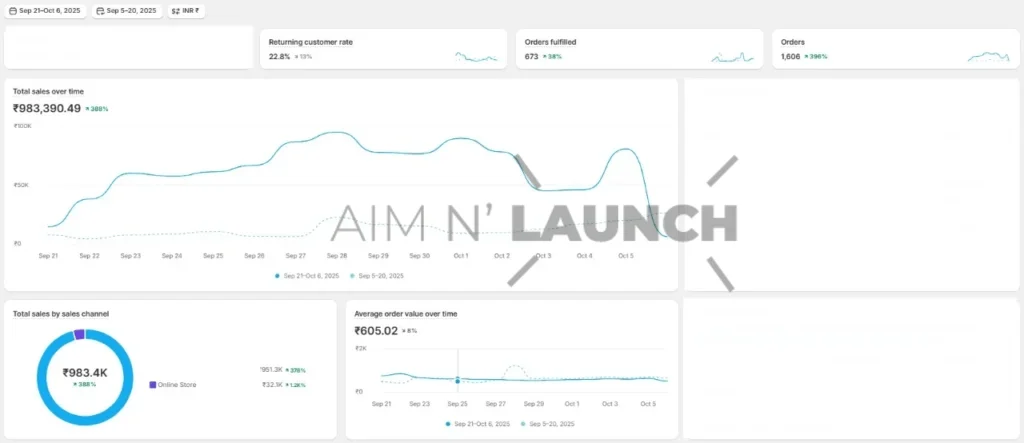
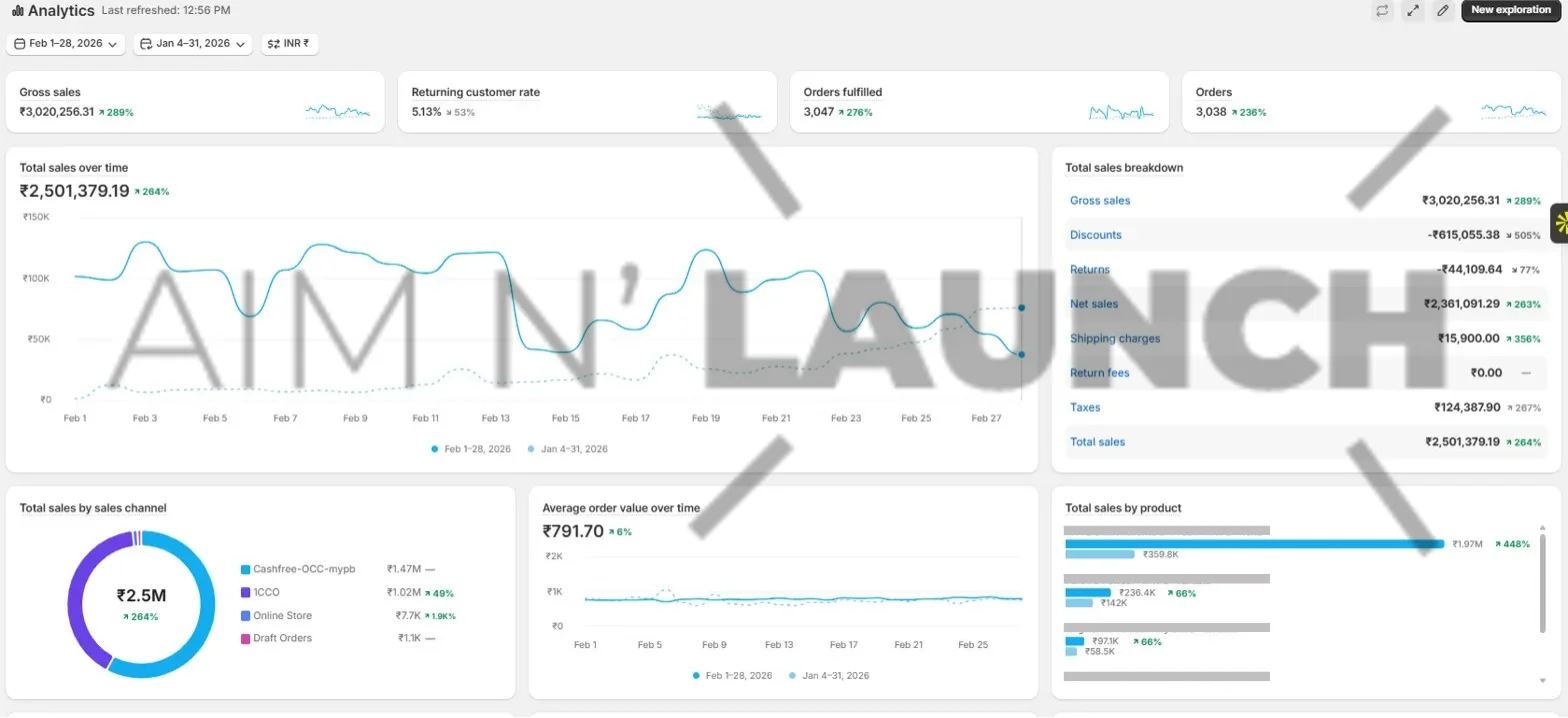
FMCG Hydration Brand: 16 days • ₹9.62L Net sales • 1,606 orders • AOV ₹605 • Returning 22.8% • +382% net vs prior period

VIEW MORE CASE STUDY
FMCG Hydration Brand Case Study

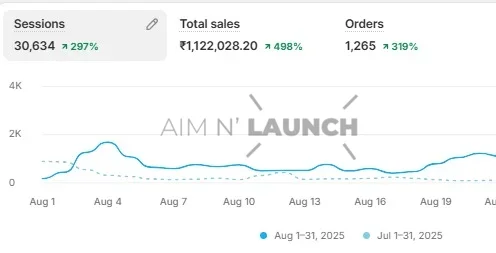
FMCG Snacks Brand (India) — 31 days • ₹11,22,028 total sales • 1,265 orders • AOV ₹887 • +498% sales vs prior • +297% sessions • +319% orders

VIEW MORE CASE STUDY
FMCG Snacks Brand Case Study

334% Revenue Growth in 30 Days • How we scaled a coconut water powder D2C brand past their ₹8L target, hitting ₹10.5L in a single month.

VIEW MORE CASE STUDY
Coconut Water Powder Brand Case Study

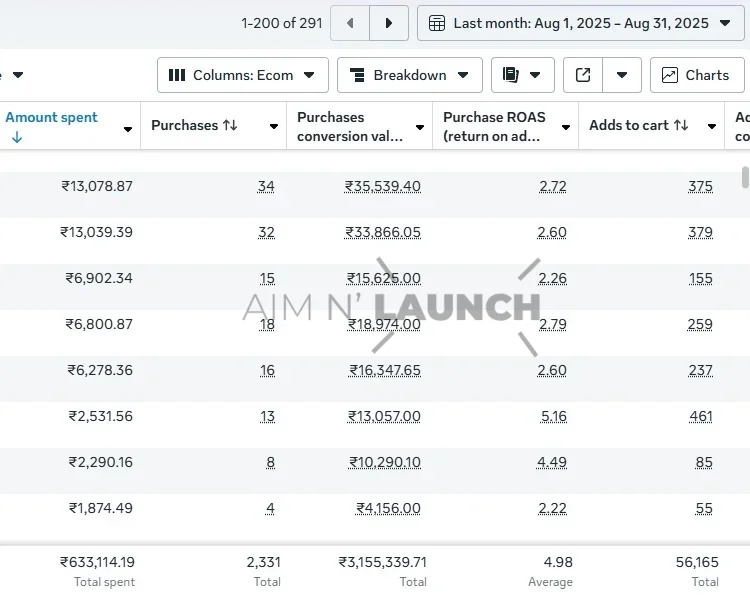
Fashion Brand (India) — 31 days • ₹42,33,340 tracked revenue (₹31,55,340 Meta + ₹10,78,000 SEO) • 4.98× ROAS on Meta • 2,331 purchases • AOV ₹1,354 • MER 6.69×

VIEW MORE CASE STUDY
Fashion Brand Case Study

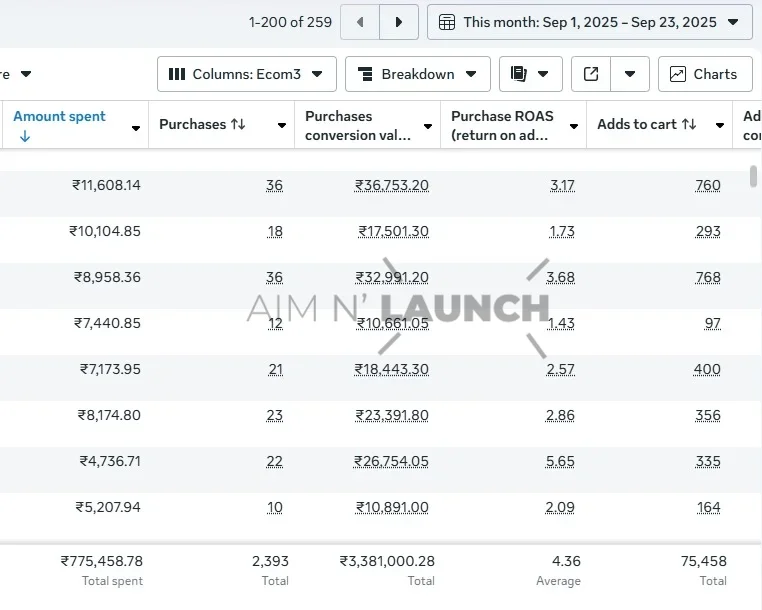
Nutrition & Wellness brand scaled to ₹3.4Cr revenue in 23 days at 4.36 ROAS with a defendable AOV strategy.

VIEW MORE CASE STUDY
Nutrition and Wellness Brand Case Study

The Scale-Up Journey of a Shark Tank Featured Healthy Snacks Brand. How we took a protein snacking brand from ₹7.8L to ₹30.2L in gross sales in a single month, with a 2.87% conversion rate and 6% AOV lift.

VIEW MORE CASE STUDY
Shark Tank Healthy Snacks Brand Case Study

Our Shopify Development Services

New Shopify Store Build

We build stores from scratch for D2C brands launching their online presence. Our process:

Discovery (Week 1): We study your brand, products, competitors, and target customer. We define the store’s purpose, key pages, and must-have features. If you are running ads, we look at which landing page structures work in your category.

Wireframing (Week 2): Mobile-first wireframes for homepage, product page, collection page, cart, and checkout. Structure and user flow before visuals. You approve the wireframes before we design anything.

Visual Design (Week 3-4): Brand-aligned UI design. Clean, conversion-focused, zero decorative clutter. We design 2-3 key pages for your review, then extend the design system to all pages after approval.

Development (Week 4-6): Shopify 2.0 build with custom sections, payment gateway integration (Razorpay, PayU, Cashfree, UPI), shipping partner integration (Shiprocket, Delhivery), speed optimization from day one. Minimal apps. Maximum performance.

Testing and Launch (Week 6-7): Cross-device testing on actual Android phones (not just Chrome simulator), payment flow verification, tracking setup (GA4, Meta Pixel, Conversions API), and go-live with 48-hour monitoring.

Shopify Store Redesign

Your store is live but not converting. We do not guess what to change. We look at the data first.

We audit your GA4 to identify drop-off points. Where do people leave? Is it the homepage, the product page, the cart, or the checkout? We check your page speed scores. We review your mobile experience on actual devices. We analyze your top exit pages and cart abandonment rate.

Then we build a redesign plan that addresses the specific problems the data reveals. Not a “let us make it look nicer” approach. A “let us fix the three things that are costing you ₹X in lost revenue every month” approach.

Redesigns include URL mapping and 301 redirects to protect your existing SEO rankings. We never sacrifice organic traffic for a visual refresh.

Shopify Speed Optimization

This is the highest-ROI project most stores can do. A one-second improvement in load time can improve conversion rate by 7-10%.

Our speed optimization process: – Remove unused Shopify apps (most stores have 5-10 apps they installed once and forgot about, each one loading JavaScript on every page) – Compress and resize all product images to optimal format and dimensions – Implement lazy loading for below-the-fold images and content – Defer non-critical JavaScript – Optimize Liquid template code to reduce server processing time – Evaluate and potentially replace heavy themes with lighter alternatives – Set up proper image CDN and caching

We have taken stores from 6-7 second load times to 2-2.5 seconds. The revenue impact is usually visible within 2 weeks.

Product Page Optimization

We redesign product pages specifically for conversion:

Above the fold (mobile): Image gallery with swipe, product title, price with discount display, 3-4 key benefit bullets, variant selector, sticky add-to-cart button, delivery estimate by pin code.

Trust section: Customer reviews with photos, trust badges, return policy statement, payment options display.

Detail section: Full product description, ingredients or specifications, how-to-use guide, product-specific FAQ.

Revenue section: “Frequently bought together” bundle, “You might also like” recommendations, free shipping threshold nudge.

Custom Shopify App and Feature Development

Sometimes your store needs something that no existing Shopify app provides. Custom subscription flows, unique bundle builders, interactive product configurators, or specific checkout modifications.

We build custom solutions using Shopify’s APIs and Liquid templating. Our philosophy is to build exactly what you need, not install a bloated app that does 50 things when you only need one.

The India-Specific Features We Build Into Every Store

COD and Prepaid Optimization

We design the entire checkout experience around the reality that 60%+ of your orders will be COD. But we also build in every possible mechanism to shift orders to prepaid: prominent prepaid discount display, UPI deep links for one-tap mobile payment, payment method comparison showing what the buyer saves with prepaid, and a clean COD flow for buyers who choose it.

Pin Code Based Delivery Estimates

Indian buyers want to know when they will get their order. Not “3-5 business days.” They want a date. We integrate pin code based delivery estimation that shows “Delivery by [date]” on the product page. This builds trust and reduces “where is my order” support tickets.

Mobile-First Everything

80%+ of your traffic is mobile. Every design decision we make starts with the phone screen. Thumb-zone navigation. Sticky add-to-cart buttons. Swipeable image galleries. Tap-friendly filters. Compressed images that load fast on 4G. A checkout flow designed for thumbs, not mouse pointers.

Shiprocket and Delhivery Integration

We connect your store to your shipping partner so orders flow automatically from Shopify to Shiprocket (or Delhivery or whatever you use). Tracking numbers sync back to the store. Customers get automated shipping updates. You do not manually copy-paste orders.

WhatsApp Integration

WhatsApp is India’s default communication channel. We integrate WhatsApp at multiple touchpoints: order confirmation messages, shipping updates, abandoned cart recovery, and a WhatsApp chat button on the store for pre-purchase questions. This is not a nice-to-have. For Indian D2C brands, WhatsApp is a critical revenue and retention channel.

Before and After: Real Store Transformations

Supplements Brand

Before: Shopify store with Dawn theme, default product pages, 5.4 second mobile load time, 1.1% conversion rate. No reviews, no trust badges, no delivery estimate. Add-to-cart button below the fold on mobile.

What we did: Rebuilt on lightweight custom architecture. Product pages with image gallery, ingredient breakdown, usage guide, customer reviews with photos, “Frequently Bought Together” bundle. Sticky add-to-cart on mobile. All images compressed. 6 unused apps removed. Pin code delivery estimator added.

After: 2.1 second load time. Conversion rate: 2.8%. AOV up 35% due to bundle suggestions. Monthly revenue increased ₹8L with zero increase in ad spend.

Fashion Brand

Before: Desktop-first design, beautiful on a laptop, nearly unusable on phone. Filters did not work on mobile. Size guide was a PDF opening in new tab. Cart page had no product images. Conversion: 0.7%.

What we did: Complete mobile-first rebuild. Filters as slide-up panel for touch. Size guide as in-page popup with visual measurements. Cart page with thumbnails, delivery estimate, and add-on suggestions. Checkout simplified to 3 steps with UPI deep link.

After: Conversion rate: 2.2%. Mobile conversion from 0.5% to 1.9%. Cart abandonment dropped from 78% to 52%. Additional ₹12L monthly revenue.

Beauty Brand

Before: Store looked beautiful but loaded in 6.8 seconds. Full-width video hero, three carousel sliders, five font families. Add-to-cart button below the fold on mobile. No prepaid incentive.

What we did: Replaced video hero with optimized static image. Removed carousels. Reduced to two font families. Sticky add-to-cart on mobile. Pin code delivery checker added. Prepaid discount display (₹70 off on UPI).

After: Load time: 2.4 seconds. Conversion: 1.3% to 2.6%. Prepaid orders from 38% to 54%. Net profitability improved even more than revenue because of COD to prepaid shift.

Frequently Asked Questions

How long does it take to build a Shopify store?

Basic setup: 2-3 weeks. Custom design project: 4-6 weeks. Full redesign with data audit: 5-8 weeks. These timelines assume you provide feedback within 2-3 business days on design reviews. Delayed feedback extends the timeline directly.

Why should I choose a Shopify development agency over a freelancer?

A freelancer can install a theme and set up your store. An agency builds a system. We handle design, development, speed optimization, conversion optimization, tracking setup, and payment/shipping integration as one cohesive project. We also understand the broader marketing context (because we run ads for D2C brands too), so every design decision connects to your acquisition and conversion strategy.

Can you redesign my store without losing SEO?

Yes. We map all existing URLs, set up 301 redirects for any that change, preserve meta tags, and monitor Search Console after launch. SEO protection is a standard part of every redesign project.

What Shopify apps do you recommend?

Fewer than you think. Every app adds JavaScript and slows your store. We typically recommend: one review app (Judge.me or Loox), one upsell app (ReConvert or Selleasy), Klaviyo for email, and your shipping integration (Shiprocket). That is usually enough. We are happy to audit your current app stack and tell you which ones to keep and which to remove.

Do you provide ongoing maintenance after launch?

Every project includes 30 days of post-launch support. Beyond that, we offer monthly maintenance retainers covering app updates, speed monitoring, new page creation, and minor design adjustments. You do not need a full-time developer on payroll.

Can you build a store that works well with paid ads?

This is our sweet spot. We run Meta and Google Ads for D2C brands, so we know exactly what a high-converting landing page needs. We build dedicated landing page templates for ad campaigns alongside standard store pages. The result: your ad traffic lands on pages designed to convert, not just your generic homepage.

Do you build on Shopify Plus?

We work with standard Shopify and Shopify Plus. For brands doing ₹1 Cr+/month in revenue, Shopify Plus offers checkout customization, higher API limits, and multi-store management that standard Shopify does not. We advise you on whether Plus is worth the upgrade based on your specific needs.

What makes a Shopify store convert well?

Three things: speed (under 3 seconds mobile), trust (reviews, return policy, secure payment signals), and friction removal (every unnecessary click, field, and step between landing and purchase eliminated). Design matters, but design in service of these three goals. A gorgeous store that loads in 7 seconds and hides the return policy converts worse than a clean, fast store that puts the buyer’s needs first.

Your Store Should Be Your Best Salesperson

It works 24/7. It does not take days off. It handles thousands of visitors simultaneously. But only if it is built right.

If your store is slow, confusing on mobile, or missing the trust signals Indian buyers need, every rupee you spend on ads is working harder than it should. We will look at your store and tell you exactly what is costing you conversions and what it takes to fix it.