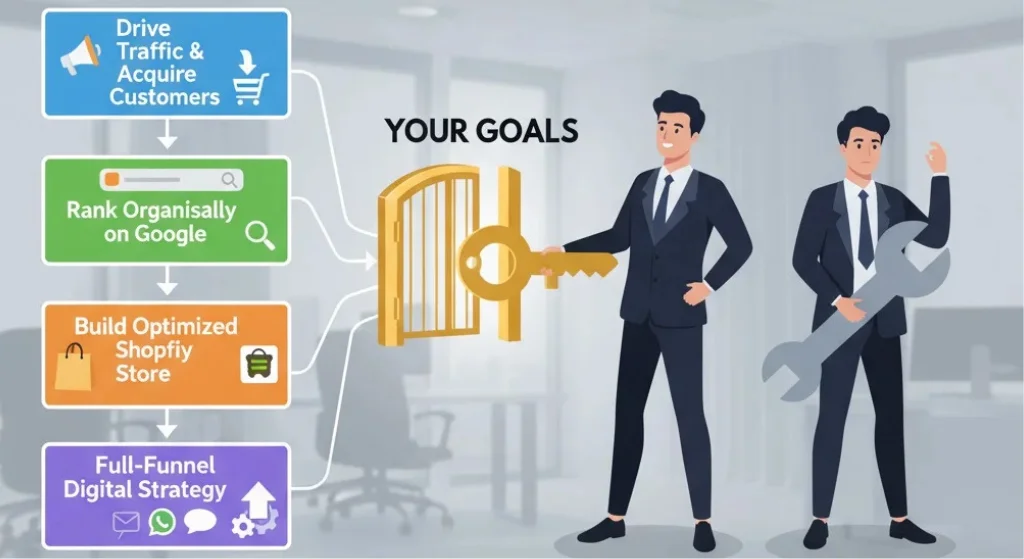
The Indian eCommerce landscape is booming. With D2C brands multiplying by the thousands and marketplaces becoming increasingly competitive, the question for most founders is no longer “should I hire a marketing agency?” — it’s “how do I choose the right one?”
The wrong agency will burn your budget chasing vanity metrics — pretty ROAS screenshots that don’t translate into actual orders or profit. The right one becomes a growth partner that scales your brand to 6 or 7 figures and beyond.
This guide will walk you through exactly what to look for, what to avoid, and what questions to ask before signing any contract.
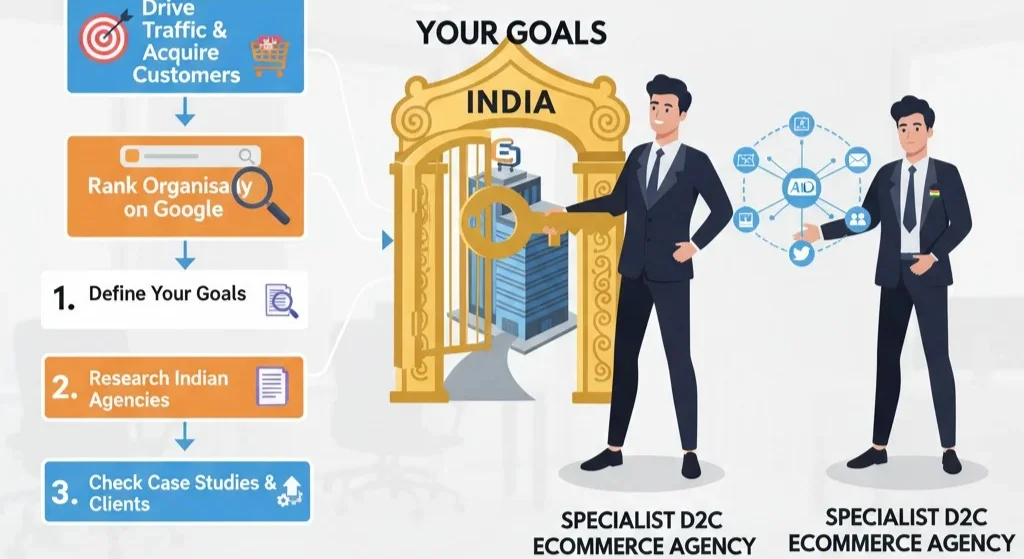
Before you evaluate a single agency, get clear on your own goals. Are you looking to:
Most brands need a combination of the above — but knowing your priority helps you filter agencies quickly. A specialist who understands D2C eCommerce inside-out is almost always a better choice than a generalist digital marketing firm.
This is the single biggest mistake D2C founders make. They hire a generic digital marketing agency that runs ads for everyone from dentists to car dealers and expect eCommerce results.
eCommerce marketing is a different discipline. It involves:
Ask any agency you speak to: “What percentage of your clients are eCommerce or D2C brands?” If the answer is less than 80%, think carefully.
Every agency in India will tell you they deliver “4X ROAS” or “10X growth.” The question is: can they prove it with real client data?
Ask for:
For reference, Aim n Launch’s case studies showcase verified results across D2C categories — including brands featured on Shark Tank India — with metrics like revenue generated and consistent ROI delivered, not just one-off spikes.
A red flag: agencies that talk only about ad spend and ROAS. These are top-of-funnel metrics. A truly capable eCommerce agency thinks about the entire buyer journey:
Top of Funnel (Acquisition)
Middle of Funnel (Conversion)
Bottom of Funnel (Retention)
If an agency can’t speak fluently about all three stages, you’re looking at a partial solution — not a growth partner.
In today’s eCommerce environment, creative is the variable that determines whether your ads work or die. Targeting and algorithms have largely commoditised. What differentiates winning brands from bleeding ones is the quality of their ad creatives.
When evaluating an agency, ask:
Agencies that handle creative in-house — scripting, casting, and editing under one roof — give you a significant speed and quality advantage over those that rely on third-party vendors.
Most agencies send weekly PDF reports with charts. What you need is daily decision-making, not weekly storytelling.
Questions to ask:
The shift from chasing ROAS to tracking cost per order and profitability is the difference between an agency that looks good on screenshots and one that actually grows your business.
Watch out for agencies that:
Pricing models for eCommerce marketing agencies in India typically fall into:
Avoid making your decision purely on price. A cheap agency that burns ₹5 lakh in ad spend with no conversions costs you far more than a premium agency that delivers a 4X return on the same budget.
The better question isn’t “what do they charge?” — it’s “what will I get back for every rupee I spend?”
This is often undervalued, but it matters enormously. You’ll be working with this team closely — sharing business data, making quick decisions, and iterating rapidly.
Look for:
India’s eCommerce market has unique dynamics — regional language audiences, WhatsApp as a primary communication channel, the dominance of COD (Cash on Delivery), and price-sensitive customers across Tier 2 and Tier 3 cities. Your agency should understand these without needing to be educated on them.
The best agency relationships don’t start with a pitch deck. They start with a genuine conversation about your business, your goals, and your current challenges.
A serious agency will:
At Aim n Launch, every new brand relationship begins with a free growth plan and scaling analysis — not a generic proposal, but a specific breakdown of where your brand is leaking revenue and how to fix it.
Choosing the right eCommerce marketing agency in India is one of the highest-leverage decisions you can make as a D2C founder. The right partner won’t just run your ads — they’ll help you fix conversion leaks, build retention systems, test creatives systematically, and make data-backed decisions every single day.
The checklist is simple:
If you’re ready to scale your D2C brand to the next level, explore what Aim n Launch offers — or get in touch directly to discuss your growth strategy.