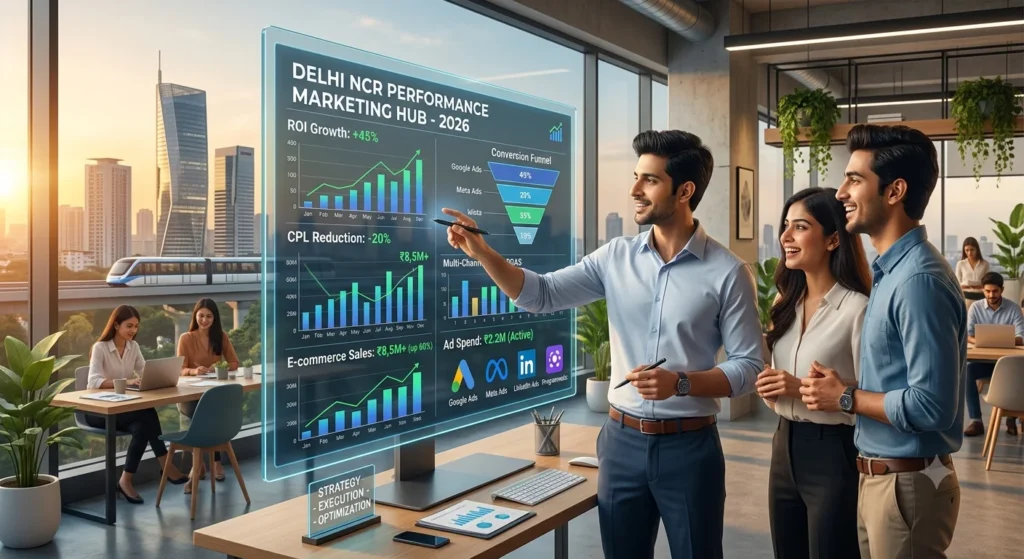
Performance Marketing Services in Delhi NCR: One Region, Very Different Brands
Delhi NCR isn’t one market — it’s several stitched together. Delhi’s brand-led D2C scene, Gurgaon’s startup and funded-brand density, Noida’s manufacturer-to-D2C sellers, and Faridabad and Ghaziabad’s growing SME ecommerce base all fall under the same “NCR” label, but they don’t behave the same way when it comes to buyers, price sensitivity, or fulfillment expectations.
If you’re searching for performance marketing services in Delhi NCR, the agency you choose needs to understand that nuance — not run one generic Meta and Google Ads playbook across the entire region and call it a regional strategy.
Why Delhi NCR Needs a Region-Aware Approach
Shared logistics, different buyers NCR’s biggest advantage is fulfillment speed — most of the region is within a same-day or next-day delivery radius of major warehouses. That’s a real edge for AOV strategy (free shipping thresholds, bundling) but it doesn’t mean every sub-market responds to the same offer or creative angle.
Funded brands next to bootstrapped ones Gurgaon has a heavier concentration of venture-backed D2C brands with aggressive growth targets. Delhi and Noida have a larger mix of founder-led, profit-first brands. A performance marketing partner needs to flex between “scale fast with funding runway” and “scale profitably without burning cash” — these are different mandates, not the same strategy with a different budget.
Category density varies by sub-region Fashion and beauty skew concentrated in Delhi and Gurgaon; FMCG, wellness, and manufacturing-linked D2C brands are more common out of Noida and Faridabad. Creative and offer strategy should reflect that, not ignore it.
What Performance Marketing Services in Delhi NCR Should Cover
Meta and Google Ads tied to cost per order and breakeven ROAS, adjusted for each sub-market’s price sensitivity and buyer intent
CRO across product pages, offers, and checkout — since NCR’s fast fulfillment only pays off if the page actually converts
A weekly creative testing system that tests angles across formats and kills underperformers fast, rather than running the same three ads for a quarter
Retention through WhatsApp and email, especially valuable in NCR given high repeat-purchase potential across a dense, well-connected buyer base
Transparent, decision-ready tracking — CAC vs LTV, contribution margin, and funnel drop-off, not just a monthly PDF of impressions
Being based in Delhi gives us direct, on-the-ground context for Gurgaon, Noida, Faridabad, and Ghaziabad brands — not a remote, generic strategy applied from a different city. Our approach across the region includes:
Daily performance tracking calls to raise, pause, or swap spend in real time
Fixing product page and checkout leaks before scaling any campaign
In-house UGC production, scripted and edited to match each sub-market’s buyer
AOV growth through smart bundling rather than blanket discounting
SEO layered alongside paid media to reduce long-term dependency on ad spend
We’ve generated ₹55 crore+ in tracked client revenue at a consistent 4.2x ROI, working with brands across FMCG, fashion, wellness, and beauty — including brands that scaled after Shark Tank India appearances.
Is performance marketing different for Gurgaon vs Noida vs Delhi brands?
The core levers — Meta/Google Ads, CRO, creative testing — stay the same. What changes is buyer price sensitivity, funding stage, and category mix, which should shape offer structure and creative angles.
What industries in Delhi NCR benefit most from performance marketing?
Fashion, beauty, FMCG, wellness, and nutrition brands see the fastest returns, largely because these categories convert well on Meta and Google with strong creative and offer testing.
How quickly can a Delhi NCR brand expect results?
Initial signal on what’s working typically emerges within 2-4 weeks of structured testing, though sustainable, profitable scale usually takes longer and depends on product-market fit and margin structure.
Does Aim n Launch work with brands outside Delhi NCR too?
Yes — while we’re based in Delhi and have deep regional context here, we work with D2C and ecommerce brands across India.